
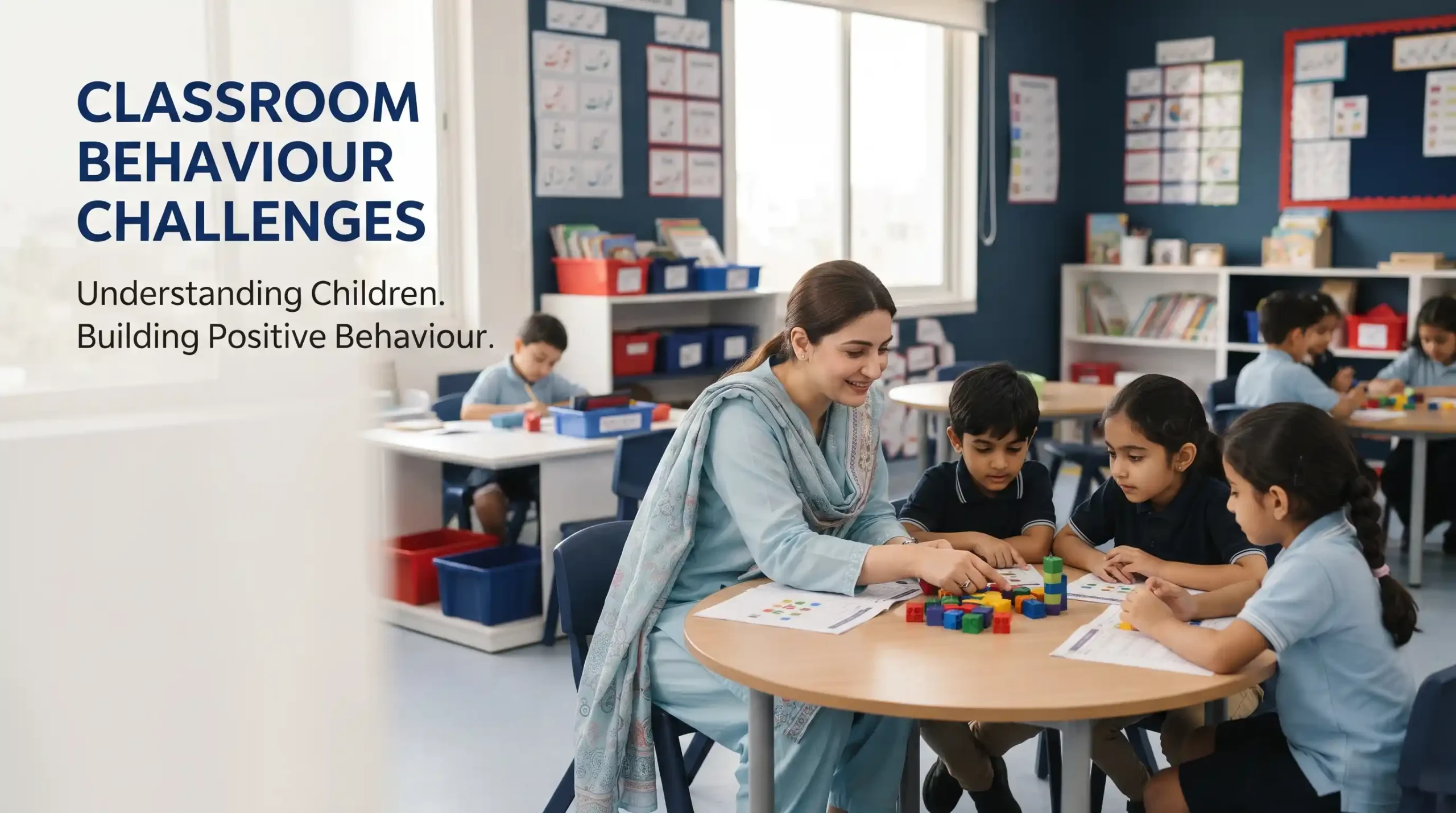
Quick answer: Children struggle to follow classroom rules for many reasons, and defiance is only one of them. The most common causes are unclear instructions, self-control that is still developing, trouble paying attention, work that feels too hard (or too easy), difficulty switching between activities, stress, and learning or developmental differences. The best response combines clear expectations, calm consistency and support for the skill the child is missing.
Every teacher knows the scene. One child is calling out answers, another keeps leaving their seat, a third has pushed their worksheet away and won’t start. It’s tiring, and it’s easy to read as “they’re just being difficult.”
Sometimes it is that simple. More often, there’s something underneath: a child who didn’t understand the task, can’t yet wait their turn, or doesn’t have the words to say “I’m overwhelmed.” When adults work out what’s behind a behaviour, they can respond in a way that actually changes it.
At School of Scholars, we believe children learn responsibility best in a classroom that is both clear about expectations and kind in how it teaches them.
What are classroom behaviour challenges?
Classroom behaviour challenges are actions that make it hard for a child, or their classmates, to learn, take part or follow routines.
They often look like this:
- Talking while the teacher is explaining
- Interrupting others or calling out answers
- Getting out of their seat again and again
- Refusing to start or finish work
- Finding it hard to wait for a turn
- Ignoring instructions
- Getting frustrated by difficult tasks
- Arguing with teachers or classmates
- Distracting other children
- Struggling to move from one activity to the next
A lot of this is a normal part of growing up. Children learn patience and self-control gradually. But if the behaviour keeps happening, seriously affects learning, or raises safety concerns, it’s time to look for extra support.
Why do children struggle to follow classroom rules?
There’s no single reason, and the same behaviour can mean different things for different children. These are the most common ones.
The rules aren’t specific enough
Telling a six-year-old to “be good” or “behave properly” doesn’t say what to actually do. Rules work better when they describe an action:
- Instead of “Be quiet,” try “Use a quiet voice while your classmates are reading.”
- Instead of “Be respectful,” try “Listen while someone else is speaking.”
- Instead of “Pay attention,” try “Look at the example and do the first question.”
When children know exactly what success looks like, they’re far more likely to get there.
Self-control is still developing
Children are still learning to manage impulses, wait, handle big feelings and think before acting. A child might know perfectly well that interrupting is wrong and still blurt something out, because the urge arrives faster than the brakes.
What helps is showing the behaviour you want, practising it together, and noticing progress. Keep the boundary steady while the skill grows.
Attention runs out
Long explanations, repetitive tasks and instructions with many steps are hard for some children to follow. They start chatting, lose track of what they were asked to do or wander around.
Shorter instructions, smaller chunks of lesson, quick checks for understanding and some hands-on activity can make a real difference. If attention problems continue and affect everyday life, parents may want to talk to a qualified professional.
The work feels too hard
A child who refuses an assignment may simply not know how to begin. Before treating it as disobedience, check whether they understand the task and have the skills for it.
Explain the first step, show an example, split the worksheet into parts, and praise progress. Often the “refusal” disappears once the task feels doable.
The work feels too easy
Boredom causes problems too. Children who finish early may fidget, interrupt or go looking for something to do. Extension activities, creative projects, puzzles or extra reading keep them engaged without overwhelming them.
Transitions are hard
Moving from playtime to a lesson, or from one subject to another, is surprisingly difficult for some children. Sudden changes can lead to refusal, frustration or tears.
Give a heads-up. “Five minutes left, then we pack away” gives a child time to get ready. Predictable routines and a simple explanation of what’s coming next also help.
Stress and big feelings
Children often can’t explain that they’re anxious, sad or worried about a friendship. It tends to come out as irritability, withdrawal, arguments, restlessness or trouble concentrating.
Watch for sudden changes in behaviour, and give children a safe, respectful way to talk. If something is going on, parents and school staff can work together to find the source and arrange support.
They can’t ask for help
Some children don’t know how to say “I don’t get this” or “I need a break.” So they push their books away, leave their seat or shut down.
Teach them simple phrases they can use:
- “I need help.”
- “Can you explain that again?”
- “I don’t understand.”
- “Can I have a short break?”
- “Can I try one more time?”
Knowing what to say gives children a better option than acting out.
The environment is overwhelming
Noise, crowded spaces and constant interruptions make learning hard for some students. Notice when problems happen and consider small changes, such as a different seat, calmer routines, lower noise levels or clearer instructions. What works for one child won’t necessarily work for another.
Learning or developmental differences
Some children have attention, learning, communication or developmental difficulties that shape how they behave in class. ADHD, for example, can affect impulse control, attention, organisation and activity levels.
But disruptive behaviour alone doesn’t mean a child has ADHD. Many things can cause it. If concerns are persistent or significantly affect learning and friendships, parents should speak to a suitable healthcare or developmental professional.
Is challenging behaviour always deliberate?
No. Children break rules because they’re confused, frustrated, impulsive, stressed or stuck on a task. That doesn’t mean the behaviour should be ignored. Rules protect learning time, respect and safety.
The approach that works best is accountability with understanding. Deal with the behaviour, and also ask what contributed to it and which skill the child needs to build.
How can teachers manage classroom behaviour challenges?
Set clear expectations. Pick a few simple, age-appropriate rules and explain them at the start of the year. Think: listen when others speak, keep hands and feet to yourself, look after classroom materials, follow instructions. Demonstrate them and come back to them often.
Notice what’s going right. Be specific. “Thank you for waiting until your classmate finished” teaches far more than a general “good job.”
Give instructions one step at a time. Long instructions get lost. Break tasks down, check understanding before moving on, and use pictures, written reminders or demonstrations.
Use fair, consistent consequences. Children need to know their choices have outcomes. Keep consequences proportionate, explain them clearly and apply them the same way every time. They should teach responsibility, not embarrass or frighten. Wherever possible, help the child see the effect of what they did and choose a better option next time.
Build in movement. Discussion, practical tasks, classroom jobs, stretch breaks and group work all help children stay engaged, as long as routines stay clear.
Shrink big tasks. A long assignment can feel impossible. Divide it into smaller parts, check in along the way and step in before frustration builds.
Prepare children for change. Verbal reminders, visual schedules, countdowns or a regular signal help students shift smoothly between activities.
Stay calm. Your tone shapes how a situation unfolds. Use a steady voice, state the boundary and offer choices where you can. For example: “You can finish this at your desk or at the quiet table. Which will help you concentrate?” If a child is upset, give them time to settle before talking it through. Safety concerns should always be handled straight away, following school procedures.
Skip the labels. Calling a child “bad,” “lazy” or “a troublemaker” damages confidence and doesn’t tell them what to change. Describe the action instead. Not “You’re a disruptive student,” but “Talking during the explanation makes it hard for everyone to hear.”
How can parents and teachers work together?
Regular conversations between home and school help everyone see what’s really happening. Useful things to compare:
- When and where the behaviour happens
- What happens right before it
- How the child reacts
- What the adults do afterwards
- Which strategies have helped
- Whether the same thing shows up in other settings
Imagine a child who avoids maths worksheets but happily finishes everything else. That points to a need for maths support, not a “bad attitude.” Sharing observations makes patterns easier to spot, and lets you build a practical plan without blaming the child or the family.
What is the ABC method for understanding behaviour?
The ABC method is a simple way to observe behaviour and spot patterns. You write down three things:
- A, Antecedent: What happened just before?
- B, Behaviour: What exactly did the child do?
- C, Consequence: What happened straight afterwards?
Here’s an example. A teacher hands out a difficult writing task. The child refuses to start, and the teacher takes the task away. If that keeps happening, refusing can become the child’s way of escaping something hard.
Seeing that pattern points to the real next step: find out why writing is difficult, give the right help, and still expect the child to take part. The ABC method lets adults act on evidence rather than guesses about a child’s intentions.
When should parents seek additional support?
Talk to the school and an appropriate professional if:
- Behaviour problems continue despite reasonable support
- Your child struggles to take part in everyday learning
- Emotional distress seems frequent or severe
- There are repeated safety concerns
- Behaviour changes suddenly or dramatically
- The same difficulties show up at home or elsewhere
- Attention, communication or learning problems come with the behaviour
An assessment can help pinpoint what’s contributing and whether extra support would help.
What does a supportive classroom look like?
A supportive classroom doesn’t have fewer rules. It has clear ones, applied fairly, with adults who teach children how to meet them. You’ll usually find:
- Clear rules and predictable routines
- Respectful relationships between teachers and students
- Fair, consistent consequences
- Positive feedback and encouragement
- Learning activities pitched at the right level
- Chances to practise communication and managing emotions
- Extra help when a child needs it
At School of Scholars, we value classrooms that help children build confidence, responsibility and good learning habits. Parents can find more guidance on child development, learning difficulties, attention and behaviour in our Knowledge Hub.
Frequently asked questions about classroom behaviour challenges
Why does my child struggle to follow classroom rules?
Usually because they’re still developing self-control, don’t fully understand what’s expected, find the work hard, feel stressed, or have attention or communication difficulties. Looking at when and where the behaviour happens helps adults choose the right strategy.
Is refusing schoolwork always bad behaviour?
No. Refusal can signal confusion, frustration, anxiety or difficulty with a task. Teachers should keep reasonable expectations while checking whether the child understands the work and needs support.
How can teachers improve classroom behaviour?
Set clear rules, teach routines, give short instructions, praise specific positive actions, use fair consequences, add movement to lessons and look for triggers. Staying in touch with parents helps too.
How should a teacher respond to a disruptive child?
Stay calm, name the specific behaviour, restate the expectation and think about what might be driving it. A private word and a support strategy usually work better than embarrassing the child in front of the class.
Can ADHD cause classroom behaviour problems?
It can. ADHD may affect attention, impulse control, organisation and activity levels. But behaviour problems have many possible causes, and only a qualified professional can assess a child and diagnose ADHD.
Why does communication between parents and teachers matter?
Because each side sees a different part of the child. Comparing notes helps identify patterns, agree on consistent strategies and decide whether a child needs more classroom support or a professional assessment.
What should parents do if their child often gets in trouble at school?
Ask the teacher for specific examples, possible triggers and what’s already been tried. Agree on a consistent plan with the school, and seek professional guidance if difficulties continue or affect your child’s well-being.
When do classroom behaviour challenges become a concern?
When they persist, interfere with learning or friendships, raise safety concerns, or appear alongside emotional, attention, communication or developmental difficulties.
Teach the skills behind good behaviour
Classroom behaviour challenges are frustrating for children, teachers and parents alike. But the behaviour is usually telling you something.
A child who interrupts may need practice waiting. A child who refuses an assignment may need help understanding it. A child who melts down at transitions may need a warning and a predictable routine.
Holding boundaries and offering support aren’t opposites. Children need both to learn responsibility and self-control. So instead of asking only “How do I stop this?”, try asking “What’s making this expectation hard to meet, and what does this child need to learn next?”
With clear expectations, patient guidance, steady routines and teamwork between home and school, children can build better behaviour and stronger learning habits.
Disclaimer: This article is for general educational purposes and doesn’t replace professional assessment or advice. Please consult a qualified professional if a child’s behaviour causes ongoing distress, significantly affects learning or raises safety concerns.