
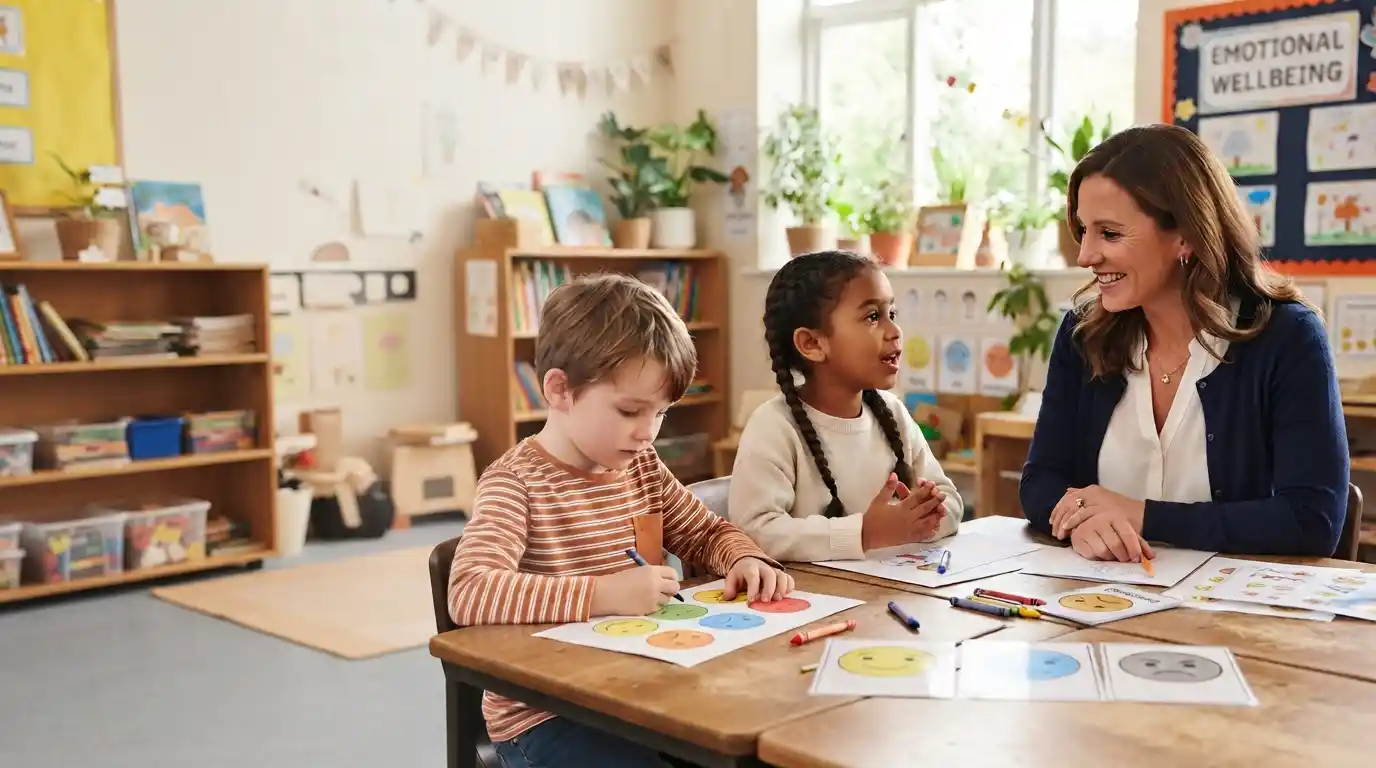
Emotional Development in Children: Helping Kids Understand and Manage Their Feelings
Children experience many emotions as they grow. Learn how parents and teachers can help children express feelings, develop empathy, build confidence, and form healthy relationships through everyday experiences.
Growing Emotionally Is Just as Important as Growing Academically
Childhood is a time of discovery. Children learn new words, make friends, explore their surroundings, and develop their own personalities. Along the way, they also experience happiness, sadness, excitement, anger, fear, and many other feelings.
However, young children do not always know how to understand or express what they feel. A child may cry when something goes wrong, become angry when sharing a toy, or feel nervous about meeting new people. These reactions are a normal part of growing up.
This is where emotional development in children becomes important. It helps children recognise their feelings, communicate their needs, understand other people's emotions, and gradually learn healthy ways to respond to difficult situations.
Just like reading and mathematics, emotional skills develop through practice, guidance, and everyday experiences. Parents, teachers, and caregivers all play an important role in this journey.
The good news is that you do not need complicated lessons to support your child's emotional growth. Small conversations, playtime, stories, encouragement, and positive relationships can make a meaningful difference.
Quick Answer: What Is Emotional Development in Children?
Emotional development in children is the process of learning to recognise, understand, express, and manage feelings. It also involves developing empathy, self-control, confidence, and healthy relationships with others. Parents and teachers support this process through positive communication, play, encouragement, and consistent guidance.
What Does Emotional Development Mean?
Emotional development refers to how children learn about their feelings and respond to different experiences. It begins in early childhood and continues as they grow, interact with others, and face new situations.
A young child may initially express frustration through crying or shouting. With adult guidance and practice, that child can gradually learn to explain what is wrong, ask for help, and find a better way to handle the situation.
Emotional development in children includes several connected skills:
Recognising Feelings
Understanding emotions such as happiness, sadness, anger, fear, excitement, and disappointment.
Expressing Emotions
Learning to communicate feelings through words, facial expressions, drawing, and appropriate behaviour.
Managing Feelings
Developing ways to calm down, handle frustration, wait patiently, and respond to challenges.
Understanding Others
Recognising how other people may feel and learning kindness, empathy, and respect.
These skills do not develop overnight. Children need time, patience, positive examples, and opportunities to practise them in everyday life.
Why Is Emotional Development Important for Children?
Children who understand their emotions can communicate more clearly, build stronger relationships, and gradually become better at handling everyday challenges. These skills also support their classroom participation and learning experiences.
Builds Self-Confidence
Children become more comfortable sharing ideas, expressing opinions, and trying new activities.
Develops Empathy
They begin to understand other people's feelings and respond with kindness and consideration.
Improves Relationships
Emotional skills help children make friends, cooperate, share, and resolve disagreements.
Supports Learning
Children learn to manage frustration, ask for assistance, and participate more comfortably in class.
Encourages Independence
They gradually become more capable of handling small problems and making age-appropriate decisions.
Builds Resilience
Children learn that difficult experiences can be managed with patience, support, and positive strategies.
Remember This
Academic success is only one part of a child's development. Children also need emotional skills to communicate, develop friendships, understand themselves, and face everyday situations.
Emotional Development in Children at Different Ages
Children develop emotional skills at different rates. Their experiences, relationships, personalities, and surroundings all influence how they express and manage feelings.
The following age groups offer general examples of emotional development. They are not strict milestones, and individual children may develop these skills at different times.
| Age Group | Common Emotional Skills | How Adults Can Help |
|---|---|---|
| 0–2 Years | Responding to familiar people, showing feelings, seeking comfort. | Provide affection, comfort, and predictable care. |
| 3–5 Years | Naming basic emotions, beginning to share, learning to take turns. | Use stories, play, simple conversations, and gentle guidance. |
| 6–8 Years | Understanding friendship, following rules, recognising others' feelings. | Encourage teamwork, discussions, and problem-solving. |
| 9–12 Years | Developing self-awareness, handling social challenges, understanding complex feelings. | Listen, respect their opinions, and encourage healthy communication. |
| Teenage Years | Developing identity, independence, emotional awareness, and deeper relationships. | Offer guidance while allowing appropriate independence and responsibility. |
The important thing is not to compare children with one another. Instead, observe their progress and provide support based on their individual needs.
Signs of Healthy Emotional Development
Parents can learn a lot by observing how children respond to everyday situations. As their skills develop, they may begin to show the following behaviours:
- They can name or describe some of their feelings.
- They gradually become more comfortable asking for help.
- They show concern when someone else is upset.
- They begin to share and take turns during activities.
- They can express disappointment with increasing communication skills.
- They develop friendships and enjoy interacting with others.
- They gradually learn to calm down with adult support.
- They show interest in solving small problems independently.
Remember that emotional progress is not always consistent. A child may manage one situation calmly and become upset during another. This is part of learning.
How Can Parents Support Emotional Development in Children?
Parents are among the most important influences in a child's emotional life. Children observe how adults communicate, manage frustration, solve problems, and treat other people.
Here are practical ways to support emotional development in children at home.
Listen to Your Child Without Judging
Give children the opportunity to talk about their experiences. If they are upset, listen before offering advice. Avoid immediately telling them that they are overreacting.
Try saying: "I can see something is bothering you. Would you like to tell me about it?"
Help Children Name Their Feelings
Children sometimes act out because they cannot explain what they are experiencing. Help them connect situations with words such as happy, worried, disappointed, nervous, or frustrated.
Try saying: "You look disappointed because the game ended. Is that how you feel?"
Be a Positive Role Model
Children learn from what adults do. Show them how to communicate calmly, apologise when necessary, and respond respectfully during disagreements.
For example: "I am feeling frustrated, so I am going to take a few deep breaths."
Encourage Independence
Allow children to make small decisions, choose activities, and solve age-appropriate problems. This helps them feel capable and responsible.
Appreciate Positive Behaviour
Notice when children share, show kindness, communicate their feelings, or try to resolve a disagreement peacefully. Specific encouragement helps them understand what they did well.
Try saying: "I liked how you listened to your friend and shared your toys."
Create a Safe and Loving Environment
Children need to know they can talk about difficult feelings without being laughed at or rejected. Make family conversations a regular part of daily life.
Maintain Healthy Daily Routines
Consistent routines around meals, sleep, homework, play, and family time can help children feel more secure. Keep expectations realistic and suitable for their age.
How to Teach Children to Understand and Manage Their Emotions
Children need more than instructions such as "stop crying" or "don't get angry." They need practical strategies that show them what to do when strong feelings arise.
Here are some simple techniques parents and teachers can introduce:
Use Emotion Words
Introduce different feeling words through daily conversations, pictures, and stories.
Practise Deep Breathing
Encourage children to take slow, gentle breaths when they feel overwhelmed.
Take a Calm Break
Create a comfortable space where children can sit quietly and settle down.
Talk About Solutions
Once everyone is calm, discuss what happened and explore better ways to respond next time.
Remember, the aim is not to prevent children from feeling angry, sad, or worried. It is to help them understand these feelings and learn healthy ways of managing them.
10 Fun Emotional Development Activities for Children
Children often learn best when activities are enjoyable. Games, drawing, storytelling, and role-play provide natural opportunities to practise communication, empathy, and emotional awareness.
Emotion Charades
Act out feelings such as happiness, sadness, excitement, and surprise. Let others guess the emotion.
Draw Your Feelings
Ask children to draw how they feel today using colours, shapes, and pictures.
Storytelling Time
Read a story and ask how the characters might feel and why.
Emotion Cards
Use pictures of facial expressions to help children identify and discuss different feelings.
Role-Playing Games
Practise situations such as sharing toys, making friends, and solving disagreements.
Gratitude Conversations
Ask children to share one thing they enjoyed or appreciated during their day.
Feelings Journal
Encourage older children to write or draw about their daily experiences and emotions.
Kindness Challenge
Choose one simple act of kindness each day, such as helping someone or sharing.
Music and Movement
Use music, dancing, and movement to encourage expression and enjoyment.
Problem-Solving Puzzles
Complete puzzles and group challenges while practising patience and teamwork.
These activities can be adjusted according to a child's age and interests. Keep them enjoyable rather than turning every activity into a test.
How Schools and Teachers Support Emotional Development
A child's school experience involves much more than completing lessons and examinations. Classrooms provide daily opportunities to interact with others, share ideas, solve problems, and develop important social skills.
Teachers can support emotional development in children by creating an environment where students feel respected, included, and comfortable expressing themselves.
Positive Classroom Relationships
Encourage respect, kindness, listening, and cooperation between students.
Group Activities
Provide opportunities for teamwork, sharing responsibilities, and solving problems together.
Creative Expression
Use art, storytelling, music, and role-play to help students communicate ideas and feelings.
Emotional Check-Ins
Give students opportunities to share how they feel and discuss their concerns.
Constructive Feedback
Recognise positive behaviour and guide children when they make mistakes.
Problem-Solving Skills
Help students discuss disagreements respectfully and consider different solutions.
At School of Scholars (SOS), confidence, empathy, emotional awareness, and positive relationships are part of the school's broader focus on student development. The goal is to support children as they grow academically, socially, and personally.
Explore the Primary Section to learn about activity-based learning, communication, confidence building, and student participation.
For younger learners, the Early Years programme highlights social interaction, communication, sensory exploration, and foundational learning experiences.
Helping Children Handle Difficult Emotions
Some situations are especially challenging for children. They may become upset when they lose a game, feel nervous about school, struggle to make friends, or become frustrated when something does not go as planned.
Instead of expecting children to manage every situation perfectly, guide them through these experiences.
| Situation | How Parents Can Help |
|---|---|
| Child becomes angry | Help them calm down before discussing what happened. |
| Child feels sad | Listen, offer comfort, and allow them to express their feelings. |
| Child feels nervous | Discuss the worry and practise the situation in a supportive way. |
| Child has friendship problems | Listen to both sides of the situation and discuss respectful solutions. |
| Child gets frustrated | Break the challenge into smaller steps and encourage another attempt. |
| Child refuses to communicate | Give them time and offer another comfortable way to express themselves. |
When Should Parents Seek Extra Support?
Strong emotions are a normal part of childhood. However, if emotional or behavioural difficulties are ongoing, severe, or affecting a child's everyday life, relationships, or school experience, speak with their teacher and consider guidance from an appropriate child development or health professional.
How Parents and Schools Can Work Together
Children benefit when the adults around them communicate and provide consistent guidance. Parents understand their child's experiences at home, while teachers observe how they interact and respond in the classroom.
What Parents Can Share
- Changes in behaviour.
- New worries or concerns.
- Friendship difficulties.
- Situations that trigger strong emotions.
- Strategies that work well at home.
What Teachers Can Share
- Classroom participation.
- Interactions with classmates.
- Communication and behaviour.
- Emotional responses to activities.
- Progress and areas needing support.
Regular communication helps parents and teachers understand children's needs and work towards shared goals. A supportive partnership makes it easier to encourage positive behaviour, confidence, and healthy relationships.
Learn more about the educational philosophy and student development approach at School of Scholars.
A Simple 7-Day Emotional Development Plan for Children
You can introduce emotional learning through small activities throughout the week. Here is a simple plan parents can try at home.
Keep these activities flexible and enjoyable. Even a few minutes of meaningful conversation each day can create opportunities for children to practise emotional skills.
Helping Children Grow With Confidence, Kindness and Understanding
Childhood is not only about learning facts, completing assignments, and achieving good grades. It is also about discovering feelings, building friendships, understanding others, and learning how to respond to life's everyday challenges.
Emotional development in children takes time, patience, and encouragement. Every conversation, positive example, shared activity, and caring relationship can contribute to a child's growth.
Parents can support this journey by listening without judgement, recognising feelings, encouraging independence, and providing a safe environment for self-expression. Teachers can strengthen these skills through teamwork, classroom discussions, creative activities, and respectful communication.
Remember, children do not need adults who always have perfect answers. They need adults who are willing to listen, understand, guide, and grow alongside them.
Help Your Child Grow Beyond the Classroom
At School of Scholars, we believe every child deserves an educational environment that supports academic learning, creativity, confidence, emotional awareness, and personal growth. Discover an approach that encourages children to learn, explore, and build a brighter future.
Explore School of Scholars →Frequently Asked Questions About Emotional Development in Children
Here are answers to common questions parents ask about children's emotional growth and wellbeing.
1. What is emotional development in children?
Emotional development in children is the process of learning to recognise, understand, express, and manage feelings. It also involves developing empathy, self-control, confidence, and healthy relationships.
2. Why is emotional development important for children?
It helps children understand their feelings, communicate their needs, handle difficult emotions, care about others, and feel more confident in social and learning situations.
3. How can parents support emotional development at home?
Parents can listen without judging, name feelings, model calm behaviour, encourage self-expression, maintain consistent routines, and give children time to talk, play, draw, and write.
4. How can I teach my child to identify emotions?
Name feelings during everyday situations and use emotion cards, stories, pictures, and facial expressions. Ask questions such as, "How do you think this person feels?"
5. What activities support emotional development in children?
Emotion charades, drawing feelings, storytelling, journaling, role-play, music, movement, puzzles, and family conversations provide opportunities to practise emotional awareness and social skills.
6. How does play help children's emotional growth?
Play lets children explore experiences, express feelings, share ideas, practise social skills, solve problems, and use their imagination in a natural and enjoyable way.
7. How can teachers support emotional development in the classroom?
Teachers can use emotional check-ins, story discussions, group work, creative activities, respectful language, and problem-solving exercises to support students.
8. Is it normal for children to have strong emotions?
Yes. Strong emotions are a normal part of childhood. Children need time, practice, and adult guidance as they learn to understand and manage their feelings.
9. What should I do when my child is angry?
First, acknowledge the feeling and help your child calm down. Later, talk about what happened and explore safe and respectful ways to handle the situation next time.
10. When should parents seek professional help?
If emotional or behavioural difficulties are ongoing, severe, or affecting everyday life at home, school, or with friends, parents should seek guidance from an appropriate child development or health professional.
Explore more from School of Scholars:
School of Scholars | About Our School | Primary Section | Early Years


Comments are closed