
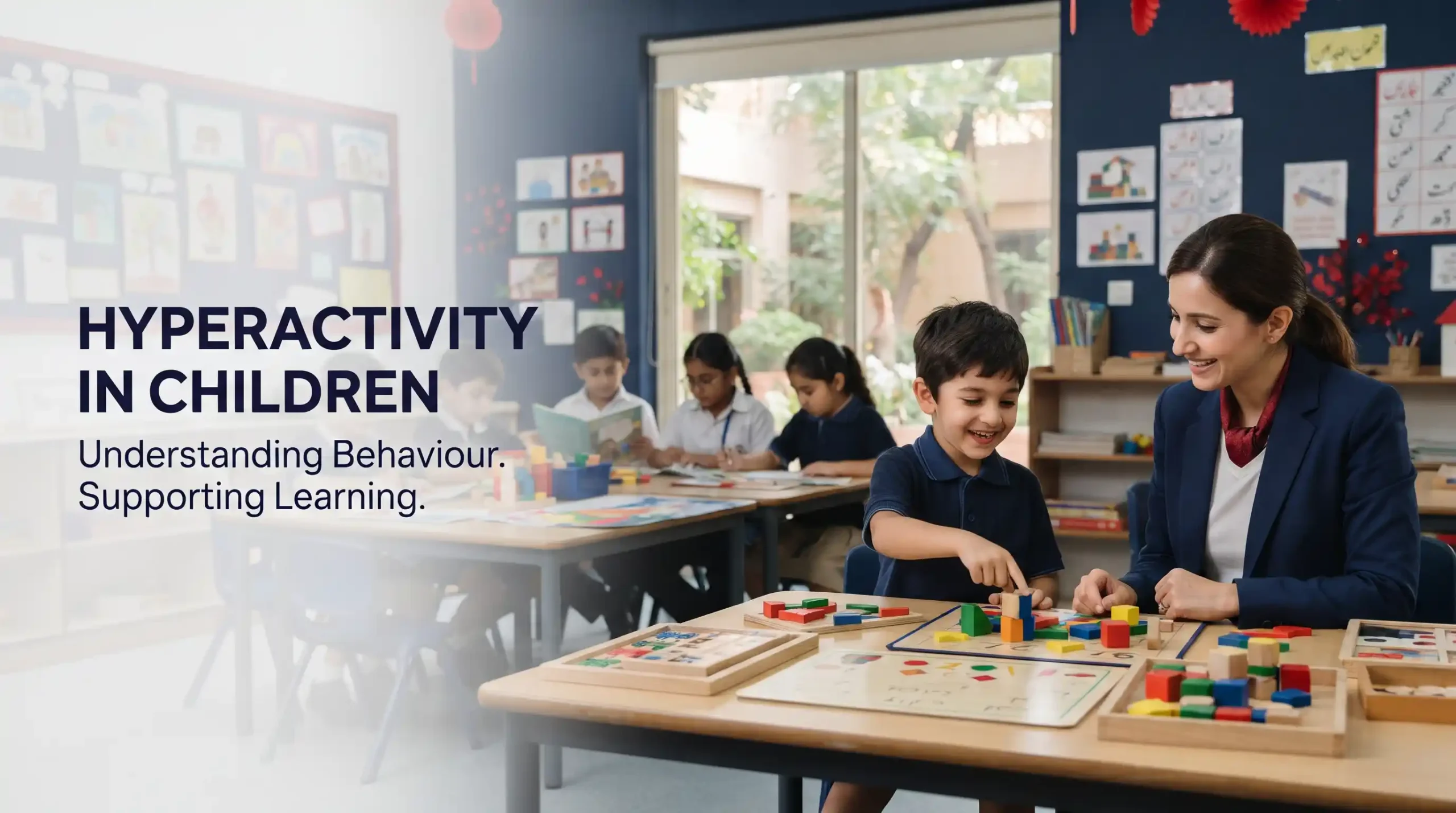
Quick answer: Hyperactivity in children means a pattern of excessive movement, restlessness or difficulty staying still when the situation calls for it. Typical signs include constant fidgeting, leaving a seat, talking nonstop, interrupting and struggling to wait. It isn’t always a medical problem. Normal development, poor sleep, stress and dull or overly hard tasks can all cause it. ADHD is one possible cause, but only a qualified healthcare professional can diagnose it. Clear routines, short instructions, active play and calm, consistent boundaries help at home and school.
Some children are simply bundles of energy. They run, climb, chatter and bounce from one thing to the next. That’s often a joy to watch, and perfectly healthy.
But when a child can’t sit through a meal, keeps leaving their seat in class or can’t wait even a moment for a turn, parents and teachers start to wonder: is this just energy, or is something else going on?
This guide helps you tell the difference, understand the possible reasons behind it, and find practical ways to support the child.
At School of Scholars, we believe a supportive environment helps children build confidence, form good learning habits and grow into their strengths.
What is hyperactivity in children?
Hyperactivity is a pattern of too much movement, restlessness or difficulty staying still when a situation needs calm.
A hyperactive child might struggle to get through a lesson, settle into a quiet activity, wait patiently or hold back the urge to talk or move. They may leave their seat often, interrupt conversations or jump from one task to the next without finishing the first.
Being energetic doesn’t automatically mean there’s a behavioural or developmental condition. Age, personality, sleep, surroundings and what a particular activity demands all play a part.
It becomes more of a concern when the behaviour is persistent, clearly different from what’s expected for the child’s age and gets in the way of daily life.
What are the common signs of hyperactivity?
Hyperactivity looks different from child to child. Some are in constant motion. Others only seem restless during activities that need sustained attention. Common signs include:
- Fidgeting, tapping or squirming a lot
- Getting up when they’re supposed to stay seated
- Running or climbing where it isn’t appropriate
- Talking excessively in lessons or conversations
- Finding quiet activities hard
- Interrupting or struggling to wait their turn
- Acting fast without thinking about the consequences
- Switching activities before finishing the last one
- Seeming restless at mealtimes, homework or classwork
- Having trouble slowing down when calm is needed
One or two of these doesn’t point to a diagnosis. Think about how often they happen, how old the child is, where the behaviour shows up and whether it’s affecting learning or relationships.
Why are some children more hyperactive than others?
There’s no single answer. Knowing the possible reasons helps you respond in a way that fits.
Normal development
Young children are still building self-control, patience and the ability to regulate their movement. A preschooler sitting still for a long time is a big ask. Most children get better at managing movement and routines as they grow, so expectations should match their age.
ADHD
Attention-deficit/hyperactivity disorder is a neurodevelopmental condition that can involve ongoing inattention, hyperactivity and impulsivity. Some children with ADHD move constantly, interrupt and struggle to wait. Others mainly have trouble with attention and organisation, with little visible hyperactivity.
Hyperactive behaviour alone doesn’t mean a child has ADHD. A diagnosis needs an assessment by a qualified healthcare professional who looks at developmental history, symptoms, how the child functions and other explanations.
Poor or irregular sleep
Tired children don’t always slow down. Many become irritable, unfocused or oddly restless. A predictable bedtime routine, enough sleep for their age and a calm sleeping space all help. If sleep problems continue, talk to a healthcare professional.
Stress and big feelings
Children who feel anxious, overwhelmed, worried or frustrated may fidget and race around. Changes at home, friendship trouble or pressure at school can all play a role. Look for patterns, and give children a chance to talk about how they feel without fear of being told off.
Tasks that don’t fit
Long explanations, repetitive work, or tasks that are too hard or too easy can all trigger restlessness. Smaller steps, hands-on activities and the right level of challenge help. Before assuming a child is misbehaving on purpose, check whether the activity suits their abilities and attention span.
A busy environment
Noisy, crowded rooms, frequent interruptions and unpredictable routines make it harder for some children to settle. Fewer distractions, clear instructions and predictable transitions can help them join in more comfortably.
Other developmental or health factors
Learning difficulties, communication problems, trouble regulating emotions and other health issues can sometimes show up as restlessness. Because several things can look alike, ongoing concerns deserve a professional opinion, not guesses or punishment.
How can hyperactivity affect learning at school?
Classrooms ask children to listen, follow instructions, finish tasks, share resources and treat others respectfully. For a child who struggles to regulate their activity, that’s a lot. They may:
- Lose focus. Movement, noise or their own thoughts pull attention away from the lesson.
- Leave work unfinished. Jumping between tasks can mean incomplete worksheets, forgotten instructions or rushed answers.
- Interrupt lessons. Calling out, talking over others or wandering at the wrong moment disrupts learning for everyone.
- Have friendship difficulties. Trouble waiting, sharing or controlling impulses can lead to misunderstandings.
- Lose confidence. Children who are constantly corrected may start to feel they can never get it right.
Teachers can help by setting clear expectations, noticing progress and teaching practical skills. A child shouldn’t be defined by their difficulties.
How can parents help a hyperactive child at home?
1. Keep daily routines predictable. Regular times for waking, meals, homework, play and bedtime help children know what’s next. A simple picture schedule works well for children who find transitions hard.
2. Give short, clear instructions. Long strings of instructions are hard to hold in mind. Instead of “Get ready for school, pack everything, tidy your room and come downstairs,” start with “Put your books in your schoolbag.” When that’s done, give the next step.
3. Make room for physical activity. Walking, cycling, dancing, swimming, outdoor games or organised sports give children healthy ways to move. It’s good for general well-being, but it isn’t a cure for ADHD or persistent hyperactivity.
4. Notice what they do well. Be specific. “You waited for your turn in that game” or “You finished your homework before starting something else” tells a child exactly which behaviour to repeat.
5. Break homework into chunks. A big assignment can feel overwhelming. Split it into short sections with a clear goal for each, and add breaks when needed. Over time, let your child take on more of the process themselves.
6. Cut down distractions. Set up a homework spot with materials within reach. Depending on your child, it may help to lower background noise, tuck unrelated toys out of sight or switch off notifications. The point isn’t to make things restrictive, only to make it easier to focus.
7. Teach them to handle feelings. Help your child name emotions such as excitement, anger, frustration and worry. Practise simple tools like slow breaths, asking for help, using words to express frustration or taking an agreed short break. These skills take time, so model them and practise often.
8. Stay calm and consistent. Children need to know what’s expected and what happens when rules are broken. Explain expectations clearly and use fair, proportionate consequences. Avoid shouting, humiliation and negative labels. A calm response deals with the behaviour without hurting your child’s confidence.
How can teachers manage hyperactivity in the classroom?
1. Set clear rules. Keep them few and simple, explain what each means and show what it looks like. Teach students how to wait for a turn, ask for help, move safely and listen while others talk.
2. Chop lessons into smaller parts. Mix short explanations with practical work, questions and demonstrations. Check understanding before moving on.
3. Plan movement breaks. Short stretches, classroom jobs or quick movement activities between tasks can help some children settle back into learning. Keep routines clear and the room safe.
4. Use visuals. Picture schedules, checklists, diagrams and examples reduce how much a child has to remember from spoken instructions.
5. Think about seating. Some students focus better away from distractions or close to the teacher. Others need something different. Watch what works for each child rather than assuming one setup suits everyone.
6. Give specific feedback. “You stayed with the activity until you finished the first section” shows exactly what went well. It builds good habits without relying on criticism.
7. Teach turn-taking and communication. Some children need direct practice in waiting, listening, sharing materials and asking questions at the right time. Role-playing everyday classroom situations can help.
8. Work with parents. Teachers can share when restlessness shows up and which strategies help. Parents can share what routines and difficulties look like at home. Together, you can spot patterns and agree on practical approaches.
9. Ask for more support when needed. If behaviour is still hard to manage after reasonable classroom strategies, the school can talk with the family and suggest professional advice. Teachers shouldn’t diagnose ADHD or assume hyperactivity always has a medical cause.
Is hyperactivity the same as ADHD?
No. Hyperactivity is a behaviour, or a symptom. ADHD is a neurodevelopmental condition with defined diagnostic criteria.
Plenty of children are naturally energetic without having ADHD. Restlessness can also come from sleep problems, stress, environmental demands and other factors. ADHD involves a lasting pattern of inattention and/or hyperactive-impulsive symptoms that affects everyday functioning, and a qualified professional looks at the whole picture before diagnosing it.
Please avoid diagnosing a child from one behaviour or an online checklist.
When should parents seek professional help?
Consider speaking to a qualified healthcare professional if:
- Restlessness is persistent and affects daily activities
- Difficulties continue at both home and school
- Attention or impulse-control problems interfere with learning
- Behaviour is affecting friendships or family relationships
- Sleep or emotional difficulties keep going
- Behaviour changes a lot without an obvious reason
- Parents and teachers are still worried despite reasonable support
A professional may look at developmental history, behaviour in different settings, sleep, emotional well-being, learning and other factors. If ADHD or another condition is identified, they can talk through support options with your family.
An early evaluation can clarify a child’s needs. It doesn’t mean every active child needs treatment.
How can parents and teachers work together?
Children do best when the key adults in their lives communicate respectfully and consistently. You can:
- Share specific observations instead of labels
- Work out which situations seem to trigger restlessness
- Talk about which routines and strategies help
- Agree on realistic, age-appropriate goals
- Notice improvements and celebrate them
- Seek professional guidance if concerns continue
Say a child often leaves their seat during long lessons but does well in shorter activities. Teachers and parents can try more structured tasks and planned movement breaks and see if that helps. The aim is to understand the child, not to assign blame.
Building a positive learning environment
Every child has their own strengths, learning style and developmental needs. A supportive classroom recognises that while keeping clear expectations for respectful behaviour.
Children who struggle with hyperactivity often benefit from predictable routines, engaging activities, positive feedback and chances to practise self-regulation.
At School of Scholars, we aim to create a place where students can grow in confidence, responsibility and effective learning habits. For more on child development, attention, behaviour and learning, visit our Knowledge Hub.
Frequently asked questions about hyperactivity in children
What are the common signs of hyperactivity in children?
Common signs include frequent fidgeting, excessive movement, difficulty staying seated, talking a lot, interrupting and struggling to wait for a turn. Always consider the child’s age, development and how much it affects daily life.
Does hyperactivity always mean a child has ADHD?
No. Hyperactivity can happen for many reasons, including normal development, sleep problems, stress and environmental demands. ADHD can involve hyperactivity, but a diagnosis requires a professional assessment of the child’s symptoms and functioning.
How can parents manage hyperactivity at home?
Set predictable routines, give clear and short instructions, encourage physical activity, break homework into smaller tasks, reduce distractions and praise positive behaviour.
How can teachers help hyperactive children in the classroom?
Use clear rules, short instructions, visual schedules, manageable assignments, planned movement breaks, suitable seating and specific positive feedback. Adapt strategies to each child’s needs.
Can lack of sleep make a child more hyperactive?
Yes. Poor or too little sleep can affect attention, mood and behaviour, and some children seem restless or irritable as a result. If sleep problems persist, speak to a healthcare professional.
Can a hyperactive child succeed academically?
Yes. Children with high activity levels can learn and progress well. Clear routines, suitable classroom strategies, engaging lessons and extra support when needed all help.
When should parents seek help for hyperactivity?
When restlessness or impulsive behaviour is persistent, affects daily functioning, gets in the way of learning or relationships, or is a significant worry at home and school.
Should teachers punish children for being hyperactive?
Teachers should keep clear boundaries, but punishment alone rarely addresses why a child is restless. Calm guidance, consistent expectations, positive reinforcement and suitable support usually work better.
Helping children channel their energy
Hyperactivity can make life harder at home and school, but it doesn’t define a child’s abilities or future.
When adults understand the possible causes, notice each child’s needs and offer steady support, children can build attention, self-regulation and good learning habits. Clear routines, plenty of active play, fair boundaries and celebrating progress make a real difference. And if worries persist, professional guidance can help you decide what comes next.
For more resources, visit the School of Scholars Knowledge Hub or learn about our approach at School of Scholars.
Disclaimer: This article is for general educational purposes only and doesn’t replace medical advice, diagnosis or treatment. Please consult a qualified healthcare professional if you’re concerned about your child’s behaviour or development.