
Introduction
In today’s digital world, problem-solving has become one of the most important skills for children. Schools are no longer focused only on memorization and exams. Instead, they are shifting toward skill-based learning that prepares students for real-world challenges.
Two of the most powerful tools in modern education are coding and robotics. These subjects are transforming how children think, learn, and solve problems.
At School of Scholars, we believe that coding and robotics are not just technical subjects they are powerful learning tools that develop critical thinking, creativity, and innovation in students.
Why Problem-Solving Skills Matter in Modern Education
Problem-solving is the ability to understand a challenge, analyze it, and find the best possible solution.
Children use problem-solving in:
- Mathematics and science
- Everyday decision-making
- Group activities
- Creative tasks
- Real-life situations
Strong problem-solving skills help students become independent thinkers who can handle challenges confidently.
This is why schools are focusing more on STEM-based education, especially coding and robotics.
What Is Coding and Robotics in Education?
Before understanding their benefits, it is important to know what they mean.
Coding
Coding is the process of giving instructions to a computer to perform tasks. Students learn logic, sequencing, and algorithmic thinking.
Robotics
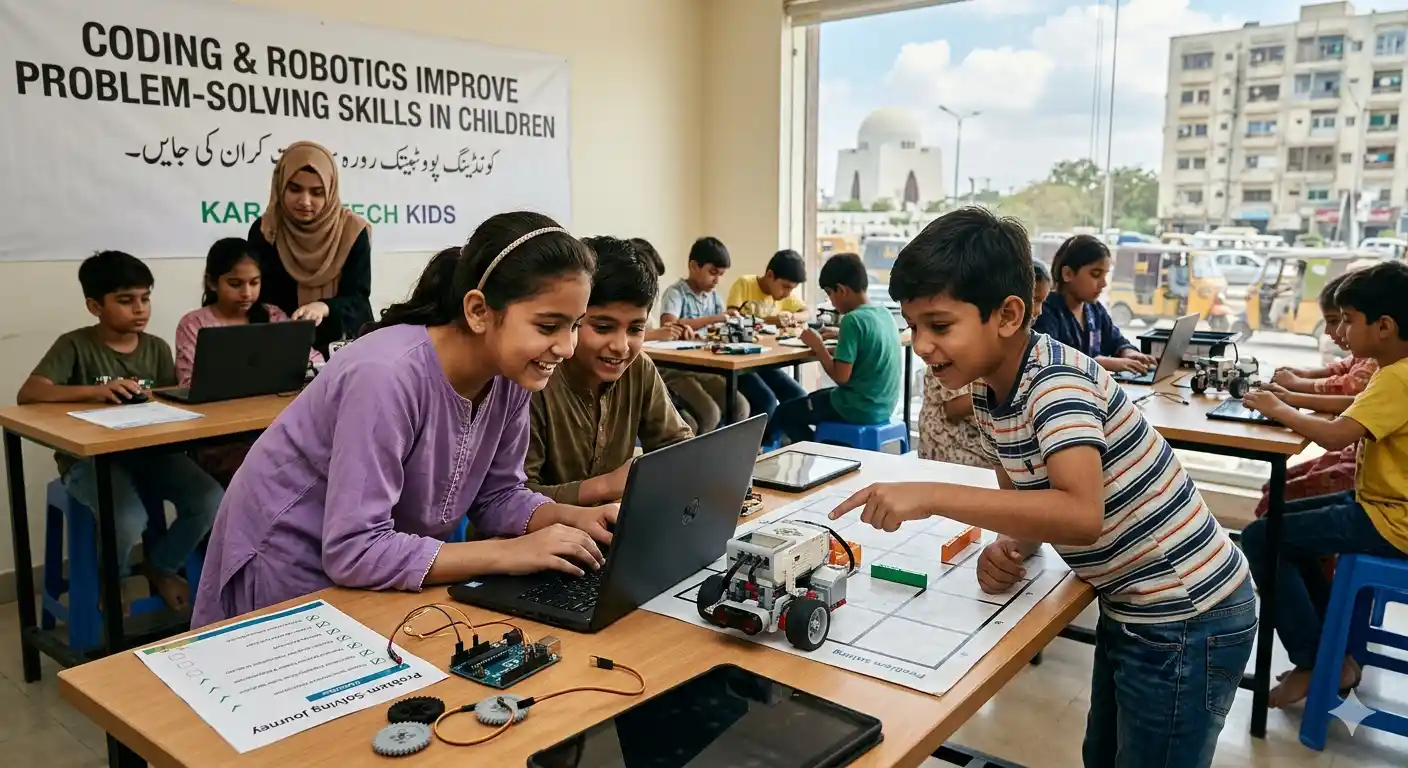
Robotics involves designing, building, and programming machines that can perform actions automatically.
When combined, coding and robotics create a powerful hands-on learning experience.
How Coding Improves Problem-Solving Skills
1. Encourages Logical Thinking
Coding teaches children to think step by step.
They learn how each instruction affects the outcome, which strengthens logical reasoning and structured thinking.
2. Teaches Trial and Error
In coding, mistakes are part of learning.
Students debug errors, test solutions, and improve their programs. This process teaches resilience and patience.
3. Breaks Big Problems into Small Steps
Coding helps students divide complex problems into smaller, manageable tasks.
This approach makes problem-solving easier and more effective in all areas of life.
4. Builds Creativity
There is often more than one way to solve a coding problem.
Students experiment with different ideas, which enhances creativity and innovation.
How Robotics Improves Problem-Solving Skills
1. Real-World Application of Knowledge
Robotics allows students to apply science, math, and coding in real-world situations.
For example, building a robot teaches them how sensors, motors, and programming work together.
2. Encourages Teamwork and Collaboration
Many robotics projects are done in groups.
Students learn how to communicate, share ideas, and solve problems together.
3. Enhances Analytical Thinking
When a robot does not work correctly, students must analyze the issue and fix it.
This strengthens their ability to think critically and logically.
4. Improves Innovation Skills
Robotics encourages students to design and build their own solutions, helping them think like inventors.
Coding + Robotics: A Powerful Combination
When coding and robotics are combined, students experience a complete learning system that develops:
- Logical thinking
- Creativity
- Technical skills
- Problem-solving ability
- Innovation mindset
This combination prepares students for future careers in technology, engineering, and Artificial Intelligence.
Benefits for Students Beyond Academics
The impact of coding and robotics goes beyond classroom learning.
Students also develop:
Confidence
Successfully completing projects builds self-confidence.
Decision-Making Skills
Students learn how to choose the best solution from multiple options.
Communication Skills
Group projects improve speaking and teamwork abilities.
Future Readiness
Students become familiar with skills needed in modern careers.
Role of Schools in Developing Problem-Solving Skills
Schools play a vital role in preparing students for the future.
Modern education should include:
- Coding classes
- Robotics labs
- STEM-based activities
- Project-based learning
- Interactive digital tools
At School of Scholars, we focus on creating an environment where students learn by doing, not just memorizing.
Real-Life Examples of Learning Through Robotics
Students can improve problem-solving skills through projects like:
- Line-following robots
- Obstacle-avoiding robots
- Smart traffic systems
- Automatic irrigation systems
- Robotic arms
Each project challenges students to think, test, and improve their solutions.
The Future of Learning
As technology continues to evolve, coding and robotics will become essential parts of education.
Future classrooms will focus on:
- Innovation over memorization
- Skills over grades
- Practical learning over theory
- Creativity over repetition
Students who learn coding and robotics today will be better prepared for future careers and challenges.
Conclusion
Coding and robotics are powerful tools that significantly improve problem-solving skills in children.
They teach students how to think logically, work creatively, and solve real-world problems with confidence.
At School of Scholars, we believe that every child should have access to STEM education that prepares them for a smarter, technology-driven future.
By learning coding and robotics, students are not just learning technology—they are learning how to think, create, and solve problems for life.
Frequently Asked Questions
1. How do coding and robotics improve problem-solving skills in children?
Coding and robotics teach children how to think logically, break problems into steps, test solutions, and learn from mistakes, which strengthens their overall problem-solving ability.
2. At what age can children start learning coding and robotics?
Children can start basic coding and robotics as early as 6–8 years old using visual programming tools and simple robotics kits designed for beginners.
3. Do coding and robotics help in school subjects like math and science?
Yes, they improve understanding of math, science, and logic by applying theoretical concepts in real-world, hands-on projects.
4. Are coding and robotics difficult for beginners?
No, most beginner programs are designed to be fun and easy. Students learn step by step through games, activities, and interactive projects.
5. Why are schools introducing coding and robotics in education?
Schools are introducing these subjects to prepare students for future careers, improve critical thinking, and develop essential 21st-century skills.