
Introduction
Early childhood is one of the most important stages of brain development. During these early years, children build the foundation for learning, behavior, communication, and emotional growth.
This is why the way children learn during early education matters so much.
One of the most effective methods for early childhood development is play-based learning.
At School of Scholars, we believe children learn best when education feels engaging, interactive, and enjoyable. Play-based learning creates the perfect environment for children to develop essential cognitive, emotional, and social skills.
What Is Play-Based Learning?
Play-based learning is an educational approach where children learn through activities, games, exploration, and hands-on experiences.
Instead of traditional memorization-focused teaching, children actively participate in learning through play.
Examples of play-based learning include:
- Building blocks
- Puzzle-solving
- Role-playing
- Storytelling
- Art and drawing
- Outdoor games
- Group activities
This method helps children learn naturally while enjoying the process.
Why Brain Development in Early Years Matters
A child’s brain develops rapidly during the first few years of life.
During this stage, children build neural connections that affect:
- Learning abilities
- Memory
- Communication
- Problem-solving skills
- Emotional development
- Social interaction
Positive learning experiences during early childhood strengthen these connections.
This is where play-based learning makes a significant impact.
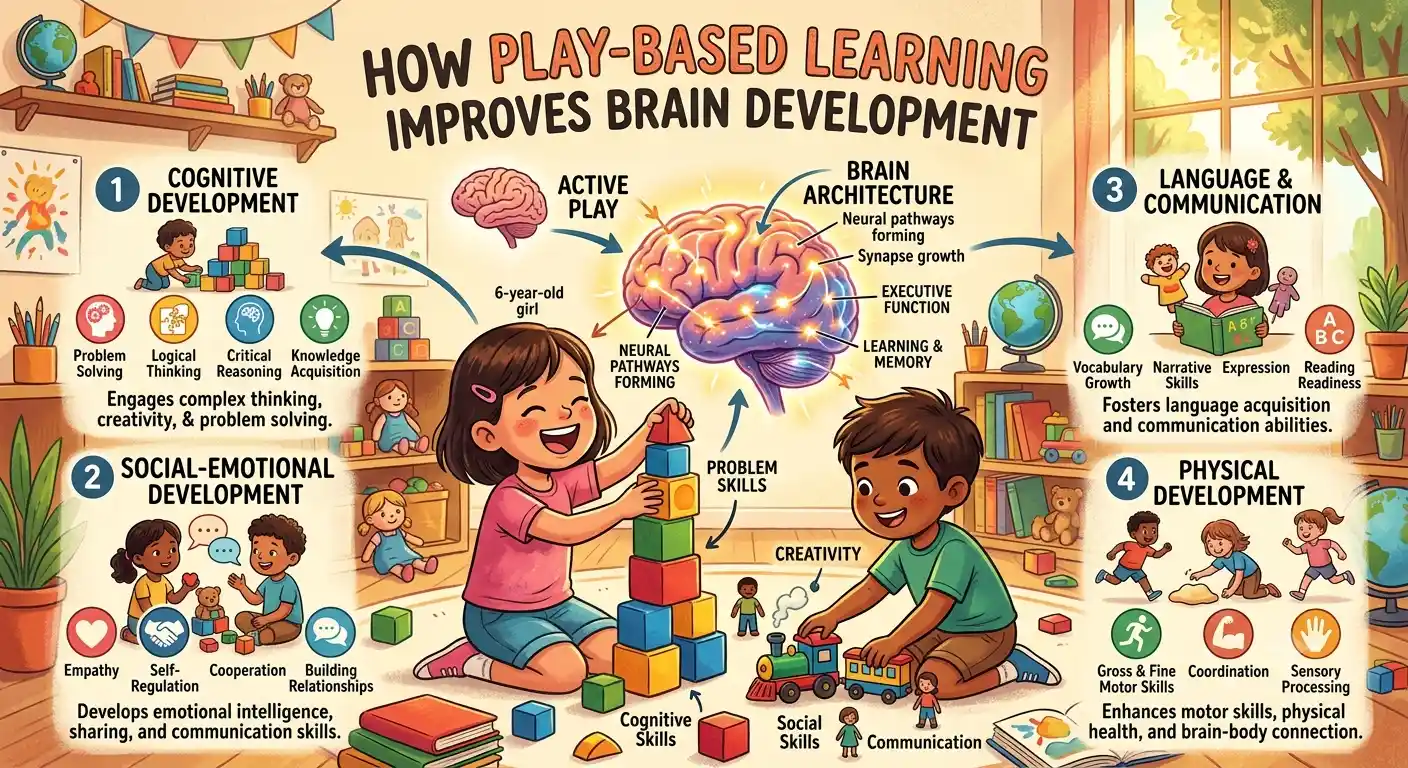
How Play-Based Learning Improves Brain Development
1. Strengthens Cognitive Skills
Play encourages children to think, observe, and make decisions.
Activities like puzzles, sorting games, and problem-solving tasks improve:
- Logical thinking
- Memory
- Focus
- Attention span
These skills support overall brain development.
2. Improves Problem-Solving Abilities
Through play, children often face challenges that require solutions.
For example:
- Completing puzzles
- Building structures
- Playing strategy games
These activities help children analyze situations and think creatively.
Problem-solving skills developed through play are essential for lifelong learning.
3. Enhances Creativity and Imagination
Creative play encourages children to imagine, create, and express ideas.
Activities like drawing, storytelling, and role-playing help children develop:
- Imagination
- Innovation
- Creative thinking
Creativity supports both emotional and cognitive growth.
4. Builds Language and Communication Skills
Interactive play helps children communicate more effectively.
Children improve their ability to:
- Express ideas
- Ask questions
- Listen to others
- Build vocabulary
Activities like storytelling and group play strengthen communication skills.
5. Supports Social and Emotional Development
Play-based learning helps children interact with others in meaningful ways.
They learn:
- Sharing
- Teamwork
- Patience
- Empathy
- Emotional control
These experiences strengthen emotional intelligence and social confidence.
6. Improves Memory and Concentration
Fun learning activities keep children engaged.
When children enjoy learning, they naturally focus better and retain information longer.
Games and hands-on activities improve:
- Memory retention
- Concentration
- Attention to detail
These are critical for academic success.
7. Encourages Physical Development
Physical play also contributes to brain growth.
Activities such as:
- Running
- Jumping
- Climbing
- Outdoor games
help improve motor skills, coordination, and physical confidence.
Physical activity also supports healthy brain function.
Benefits of Play-Based Learning in Schools
Schools that adopt play-based learning create more engaging classrooms.
Students become:
- More curious
- More confident
- More creative
- Better communicators
- Stronger problem-solvers
This approach builds both academic and life skills.
School of Scholars Approach
At School of Scholars, we believe early learning should be exciting, meaningful, and development-focused.
Our approach includes:
- Interactive classroom activities
- Hands-on learning
- Group collaboration
- Creative exploration
- Play-based education strategies
We aim to create an environment where children enjoy learning while building strong foundations for future success.
Conclusion
Play-based learning improves brain development by supporting cognitive growth, creativity, communication, problem-solving, and emotional development.
It transforms learning from passive instruction into active exploration.
At School of Scholars, we believe children learn best when they are engaged, curious, and happy.
Because when learning feels like play, brain development happens naturally and powerfully.
Frequently Asked Questions
1. What is play-based learning?
Play-based learning is an educational approach where children learn through games, activities, exploration, and hands-on experiences instead of traditional memorization methods.
2. How does play-based learning improve brain development?
Play-based learning improves brain development by strengthening memory, problem-solving skills, creativity, communication, and cognitive abilities through active engagement.
3. Why is play important in early childhood education?
Play helps children develop social, emotional, physical, and mental skills. It also supports healthy brain development during the early years.
4. What are examples of play-based learning activities?
Examples include puzzle-solving, role-playing, storytelling, building blocks, art activities, outdoor games, and group learning activities.
5. How does School of Scholars use play-based learning?
At School of Scholars, play-based learning is integrated through interactive activities, creative exploration, group collaboration, and hands-on educational experiences.