
Introduction
Education is evolving rapidly, and schools must prepare students for a future driven by technology, automation, and innovation. One of the most effective ways to achieve this is by introducing robotics classes into the curriculum.
Today, robotics classes in schools are no longer considered an extracurricular activity. They are becoming an essential part of modern education because they help students develop critical thinking, creativity, problem-solving abilities, and technical skills needed in the 21st century.
Schools that embrace robotics education are preparing students not only for academic success but also for future careers in technology, engineering, artificial intelligence, and automation.
For example, institutions like School of Scholars are focused on innovative and future-oriented learning approaches that help students develop practical skills beyond traditional classroom education. Learn more at https://schoolofscholars.edu.pk/
What Are Robotics Classes?
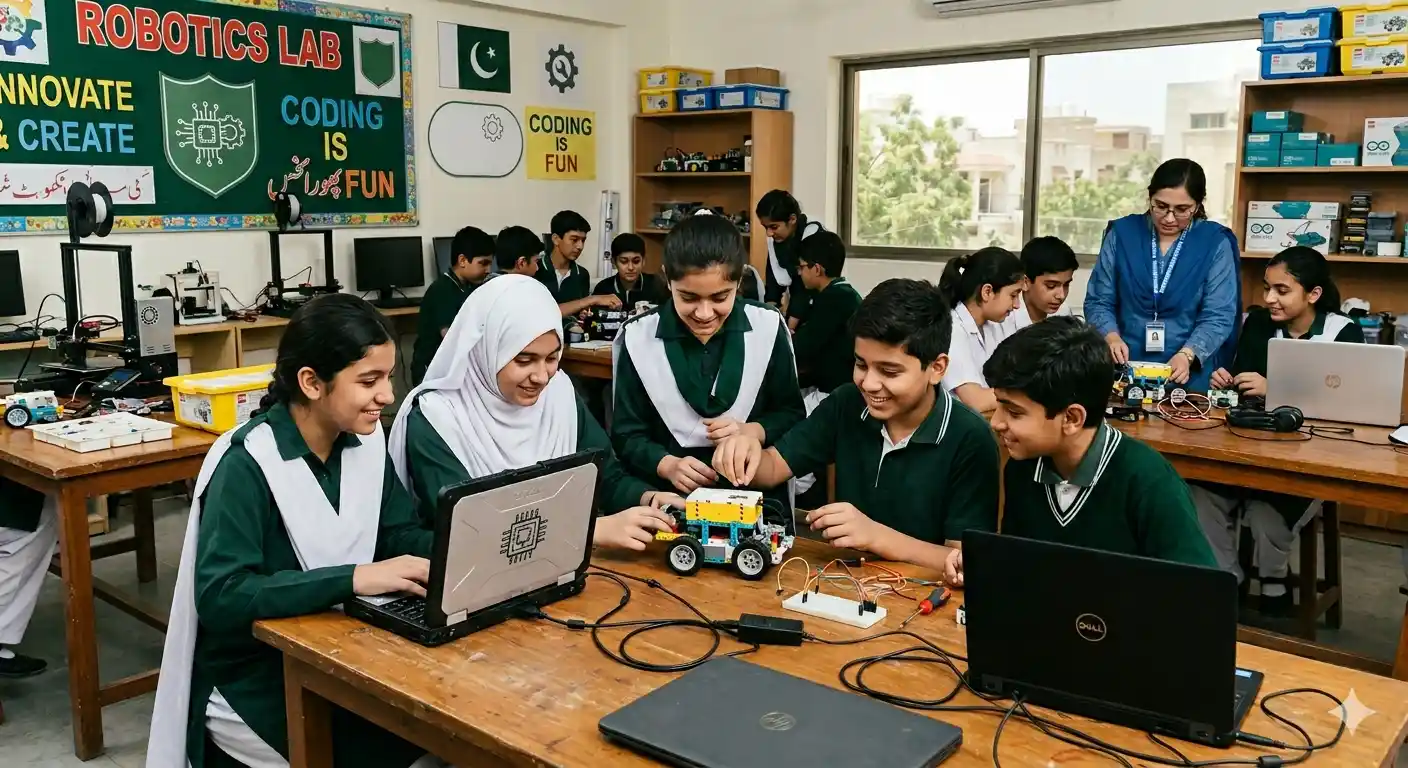
Robotics classes teach students how to design, build, and program robots using various tools, sensors, and coding platforms.
Students learn:
- Basic engineering concepts
- Coding and programming
- Electronics fundamentals
- Problem-solving techniques
- Team collaboration
Rather than simply reading about technology, students gain hands-on experience by creating projects and testing their ideas in real-world situations.
Why Robotics Education Matters Today
The world is becoming increasingly dependent on technology. Industries ranging from healthcare to manufacturing now rely on automation and intelligent systems.
Introducing robotics classes in schools ensures students understand how technology works instead of simply using it.
Key Reasons Robotics Education Is Important
- Encourages innovation and creativity
- Builds STEM knowledge
- Develops coding skills
- Enhances problem-solving abilities
- Prepares students for future careers
According to educational experts, STEM-focused learning helps students become more adaptable and better prepared for future workforce demands.
Benefits of Robotics Classes for Students
Improves Critical Thinking Skills
Students must analyze problems, test solutions, and make improvements when building robots.
This process teaches them how to think logically and solve challenges independently.
Strengthens STEM Learning
Robotics combines:
- Science
- Technology
- Engineering
- Mathematics
Students see how these subjects work together in practical applications.
Develops Coding Skills
Programming is one of the most valuable skills in today’s digital economy.
Through robotics projects, students learn coding concepts in an engaging and interactive way.
Encourages Teamwork
Most robotics projects require collaboration.
Students learn:
- Communication
- Leadership
- Cooperation
- Project management
These skills are valuable in both education and future careers.
Boosts Creativity
Students can design unique robots, solve real-world problems, and experiment with innovative ideas.
Robotics encourages creative thinking far beyond traditional classroom activities.
How Robotics Supports Future Career Readiness
Many of the fastest-growing careers are technology-based.
Students exposed to robotics gain early experience relevant to fields such as:
| Career Field | Robotics Benefits |
|---|---|
| Software Development | Coding and programming |
| Artificial Intelligence | Logic and automation |
| Engineering | Design and problem-solving |
| Data Science | Analytical thinking |
| Cybersecurity | Technical understanding |
| Automation | Systems management |
Introducing robotics at an early age helps students explore these career paths before entering higher education.
Robotics Classes Build Real-World Problem Solvers
One of the biggest advantages of robotics education is that students learn how to solve real-world challenges.
For example, students may create robots designed to:
- Save energy
- Improve safety
- Assist elderly people
- Reduce waste
- Support environmental sustainability
This practical learning approach helps students connect classroom knowledge with everyday life.
Why Schools Should Act Now
Technology is advancing faster than ever before.
Schools that delay implementing robotics programs risk leaving students behind in an increasingly digital world.
Modern parents are also looking for institutions that provide future-ready education and practical learning experiences.
Schools such as School of Scholars are embracing innovative teaching methods that encourage creativity, technology integration, and hands-on learning.
Explore more about their educational programs:
https://schoolofscholars.edu.pk/
How Schools Can Successfully Introduce Robotics Classes
Step 1: Start Small
Schools can begin with beginner-friendly robotics kits and basic programming activities.
Step 2: Train Teachers
Professional development ensures educators can effectively teach robotics concepts.
Step 3: Create STEM Labs
Dedicated innovation spaces encourage experimentation and project-based learning.
Step 4: Organize Competitions
Robotics competitions motivate students to apply their skills and showcase creativity.
Step 5: Integrate Robotics Across Subjects
Robotics can support science, mathematics, engineering, and technology education.
The Future of Robotics in Education
The future classroom will be more interactive, technology-driven, and student-centered.
Emerging trends include:
- Artificial Intelligence learning
- Smart classrooms
- Machine learning projects
- Automation labs
- Internet of Things (IoT) education
Schools that introduce robotics today will be better positioned to prepare students for tomorrow’s opportunities.
Frequently Asked Questions
What are robotics classes in schools?
Robotics classes teach students how to design, build, and program robots while learning engineering and coding concepts.
Why should schools introduce robotics classes?
Robotics classes develop problem-solving skills, creativity, teamwork, and technical knowledge needed for future careers.
At what age can students start learning robotics?
Students can begin robotics education as early as primary school using age-appropriate robotics kits and activities.
How do robotics classes support STEM education?
Robotics combines science, technology, engineering, and mathematics through practical learning experiences.
Do robotics classes help with future careers?
Yes. Robotics education provides foundational skills relevant to engineering, AI, software development, automation, and other technology fields.