
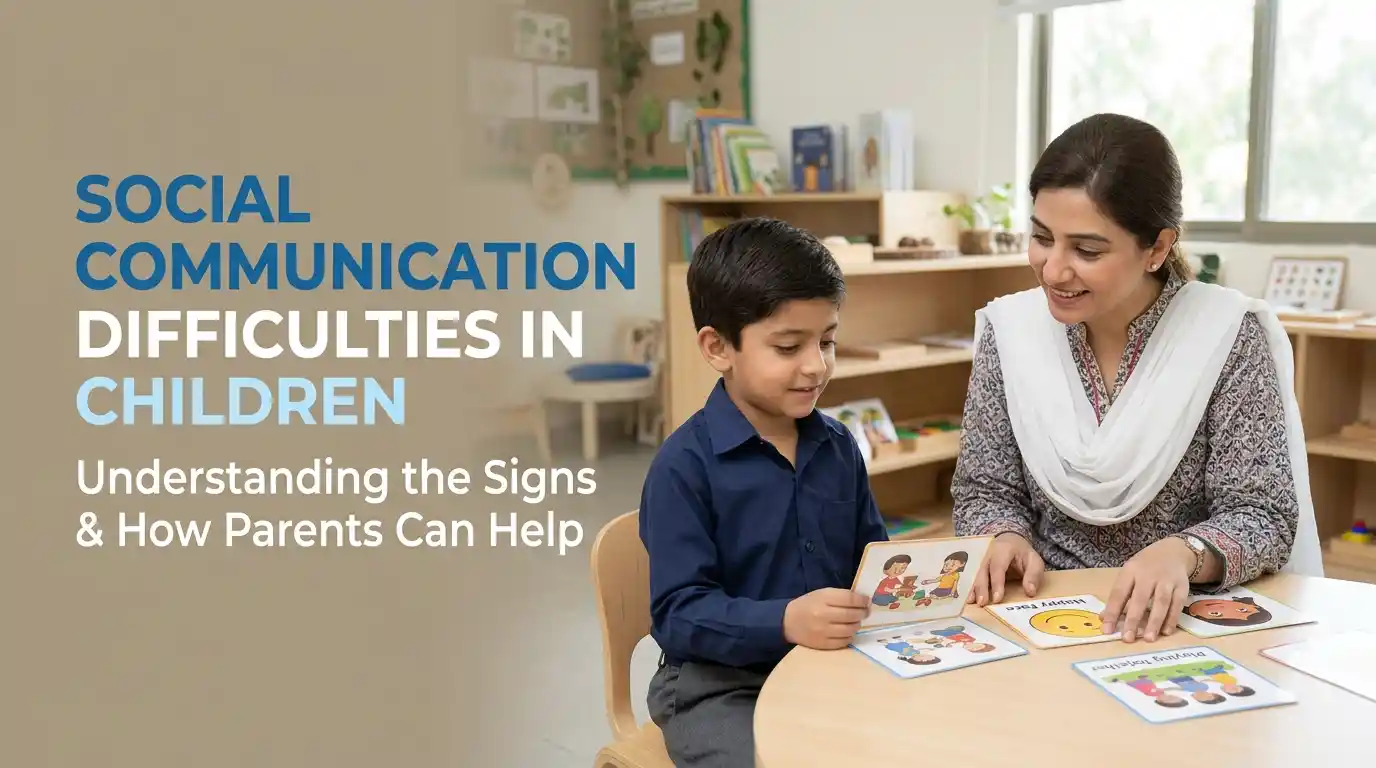
Children learn to communicate by doing much more than speaking words. They also learn how to listen, take turns, understand facial expressions, respond to others, and recognize what is happening in a conversation.
Some children find these social parts of communication more challenging than others. These challenges are known as social communication difficulties in children. They can affect friendships, classroom participation, and everyday interactions, even when a child has a good vocabulary and can pronounce words clearly.
Social communication difficulties happen when a child finds it hard to use communication effectively with other people. This may include starting conversations, taking turns, staying on topic, understanding jokes, reading facial expressions, or recognizing social cues. If these challenges continue and affect daily life, parents can discuss them with a teacher, pediatrician, or qualified speech-language professional.
What Exactly Are Social Communication Difficulties in Children?
Social communication describes how children use language and non-verbal signals when interacting with other people. It is not only about knowing words or forming sentences. It also involves understanding when to speak, how to respond, and how to adjust communication to different people and situations.
A child may have a strong vocabulary but still experience difficulty with:
- Starting a conversation or joining a group.
- Taking turns while speaking and listening.
- Understanding questions and responding appropriately.
- Staying on the topic of a conversation.
- Recognizing facial expressions, gestures, and tone of voice.
- Understanding jokes, sarcasm, idioms, and indirect language.
- Considering what another person may be thinking or feeling.
Children develop these skills at different rates. However, when challenges continue over time, they may affect a child's confidence, friendships, and participation in everyday activities.
Common Signs to Watch For
Social communication difficulties can look different from one child to another. Parents may notice some of the following patterns at home, during play, or in social settings.
Difficulty Starting Conversations
A child may want to play with other children but find it difficult to approach them, greet them, or ask to join a game. They may need support to find the words to begin an interaction.
Difficulty Taking Turns
Some children may interrupt frequently, speak for a long time without noticing the listener's response, give very short answers, or find it hard to wait for their turn.
Difficulty Staying on Topic
A child may continue talking about a favourite subject even when the conversation has moved on. They might not always notice when another person wants to discuss something different.
Difficulty Reading Social Cues
Facial expressions, gestures, body language, and tone of voice all communicate meaning. A child may find it difficult to recognize whether someone is interested, upset, joking, or confused.
Difficulty Understanding Non-Literal Language
Jokes, sarcasm, metaphors, and expressions can be confusing. For example, a child may interpret “it's raining cats and dogs” literally instead of understanding that it means heavy rain.
Challenges Responding to Others
A child may find it difficult to respond to questions, show interest in another person's ideas, or understand what information is expected in a particular social situation.
How Social Communication Difficulties Can Show Up at School
School provides many opportunities for children to communicate with classmates and teachers. It can also make social communication challenges easier to notice because children take part in group activities, classroom discussions, and shared tasks throughout the day.
A child experiencing these challenges may find it difficult to:
- Join group activities or classroom games.
- Work cooperatively with classmates.
- Follow conversations during lessons.
- Ask a teacher for help when needed.
- Understand classroom expectations that are not explained directly.
- Participate in discussions or group projects.
- Build and maintain friendships.
Why communication between parents and teachers matters: Teachers may notice certain patterns during group activities that are less visible at home. Sharing observations can help families and schools understand where a child needs encouragement and support.
How Social Communication Affects Friendships
Building friendships involves more than talking to other children. It requires listening, sharing interests, taking turns, understanding feelings, respecting personal space, and working through disagreements.
Children who experience social communication difficulties may want to make friends but feel unsure about how to join a game, keep a conversation going, or respond when another child changes the subject.
These challenges do not mean a child does not want friendships or does not care about others. They may simply need more opportunities to understand social situations and practise communication skills in a comfortable environment.
What Causes Social Communication Difficulties?
There is no single explanation for every child's communication challenges. Social communication difficulties may occur alongside different developmental or communication-related conditions, including:
- Autism spectrum disorder.
- Developmental language difficulties.
- Speech and language disorders.
- Hearing difficulties.
- Other developmental differences.
These are possible associations, not a diagnosis. A child who has difficulty with social communication does not automatically have any particular condition. A qualified professional needs to consider the child's overall development and individual communication profile.
Social Communication Difficulties vs. Speech Problems
Speech and social communication are related, but they are not the same thing. Speech problems generally involve how a child produces sounds and words. Social communication is about how a child uses verbal and non-verbal communication when interacting with others.
Speech or Pronunciation Difficulty
A child may have difficulty producing certain sounds or pronouncing words clearly, while still being comfortable starting conversations, taking turns, and understanding social cues.
Social Communication Difficulty
A child may pronounce words clearly and use a wide vocabulary but still find it challenging to start conversations, understand facial expressions, or stay on topic.
Understanding this difference helps parents describe their concerns more clearly when speaking with teachers or professionals.
How Parents Can Help at Home
Everyday family activities can provide gentle opportunities to practise communication. The aim is not to pressure children into behaving in a particular way, but to make social interactions easier to understand and more comfortable.
-
Talk About Feelings
During everyday conversations or after reading a story, ask questions such as “How do you think your friend felt?” or “What do you think happened?” This can encourage children to think about different perspectives.
-
Practise Conversations Through Play
Use simple role-play to practise greeting someone, asking to join a game, requesting help, starting a conversation, or saying goodbye. Keep the activity relaxed and enjoyable.
-
Read Stories Together
Stories create opportunities to discuss characters, emotions, actions, and social situations. Ask questions such as “Why do you think the character did that?” or “How might they feel?”
-
Model Good Communication
Children learn by observing everyday interactions. Demonstrate listening, taking turns, showing interest, and responding thoughtfully when speaking with family members and others.
-
Create Opportunities for Positive Interaction
Offer comfortable opportunities for your child to play, share activities, and communicate with others. Follow their interests and give them enough time to respond.
When Should Parents Seek Professional Support?
It may be helpful to speak with a pediatrician, speech-language professional, or your child's teacher when communication challenges are ongoing or begin affecting everyday life.
Consider seeking advice if your child:
- Consistently finds it difficult to communicate with other people.
- Struggles significantly with starting or maintaining conversations.
- Has ongoing difficulty understanding social cues.
- Frequently finds it hard to make or maintain friendships.
- Becomes frustrated during social interactions.
- Experiences challenges that affect classroom participation.
- Shows similar difficulties in different settings, such as home, school, and social activities.
Remember: Seeking an evaluation does not mean something is seriously wrong. It can help parents understand their child's communication strengths and challenges and identify what kind of support may be useful.
How Schools Can Support Children
Schools can help children develop communication skills by creating a welcoming environment where different communication needs are respected. Teachers can support social interaction through everyday classroom routines and activities.
- Create opportunities for structured group interaction.
- Encourage turn-taking during classroom discussions and games.
- Use cooperative activities that allow children to practise working together.
- Give children enough time to understand and respond.
- Model clear, respectful communication.
- Encourage positive and respectful peer interactions.
- Keep parents informed about observations and progress.
When families and schools share information and work together, children can receive more consistent encouragement across different environments.
Why Early Support Matters
Communication skills continue to develop throughout childhood. Recognizing ongoing challenges can help parents and teachers understand which areas may benefit from additional support.
Depending on the child's needs, support may focus on:
- Starting and maintaining conversations.
- Understanding and responding to social cues.
- Taking turns while communicating.
- Expressing and understanding emotions.
- Solving everyday social problems.
- Considering different points of view.
- Participating more comfortably in classroom interactions.
There is no single approach that works for every child. Support should reflect the child's individual strengths, challenges, and everyday experiences.
Frequently Asked Questions
What are social communication difficulties in children?
Social communication difficulties are challenges with using communication effectively in social situations. They may involve starting conversations, taking turns, understanding social cues, staying on topic, or recognizing another person's perspective.
What are the common signs of social communication difficulties?
Common signs include difficulty starting conversations, taking turns, staying on topic, reading facial expressions, understanding jokes or sarcasm, and making or maintaining friendships. The signs can vary from child to child.
Can a child have social communication difficulties without a speech problem?
Yes. A child may pronounce words clearly and have a good vocabulary but still find it difficult to understand social cues, take turns, or manage conversations. Speech production and social communication are different areas of communication.
When should parents seek help for social communication difficulties?
Parents can seek advice when communication challenges continue over time, affect friendships or school participation, cause noticeable frustration, or appear in more than one setting. A teacher, pediatrician, or qualified speech-language professional can help guide the next steps.
How can parents support social communication at home?
Parents can practise conversations through play, read stories together, talk about feelings, model listening and turn-taking, and create relaxed opportunities for positive social interaction.
Final Thoughts
Social communication helps children build friendships, participate in classroom activities, and understand the people around them. While some social skills develop gradually, ongoing difficulties with conversations, social cues, or interactions deserve attention and understanding.
Parents do not need to diagnose the problem themselves. Patience, encouragement, communication with teachers, and professional guidance when needed can help children develop confidence and feel more comfortable in social situations.
Explore more parent-friendly resources in the School of Scholars Knowledge Hub or visit the School of Scholars website.


Comments are closed