
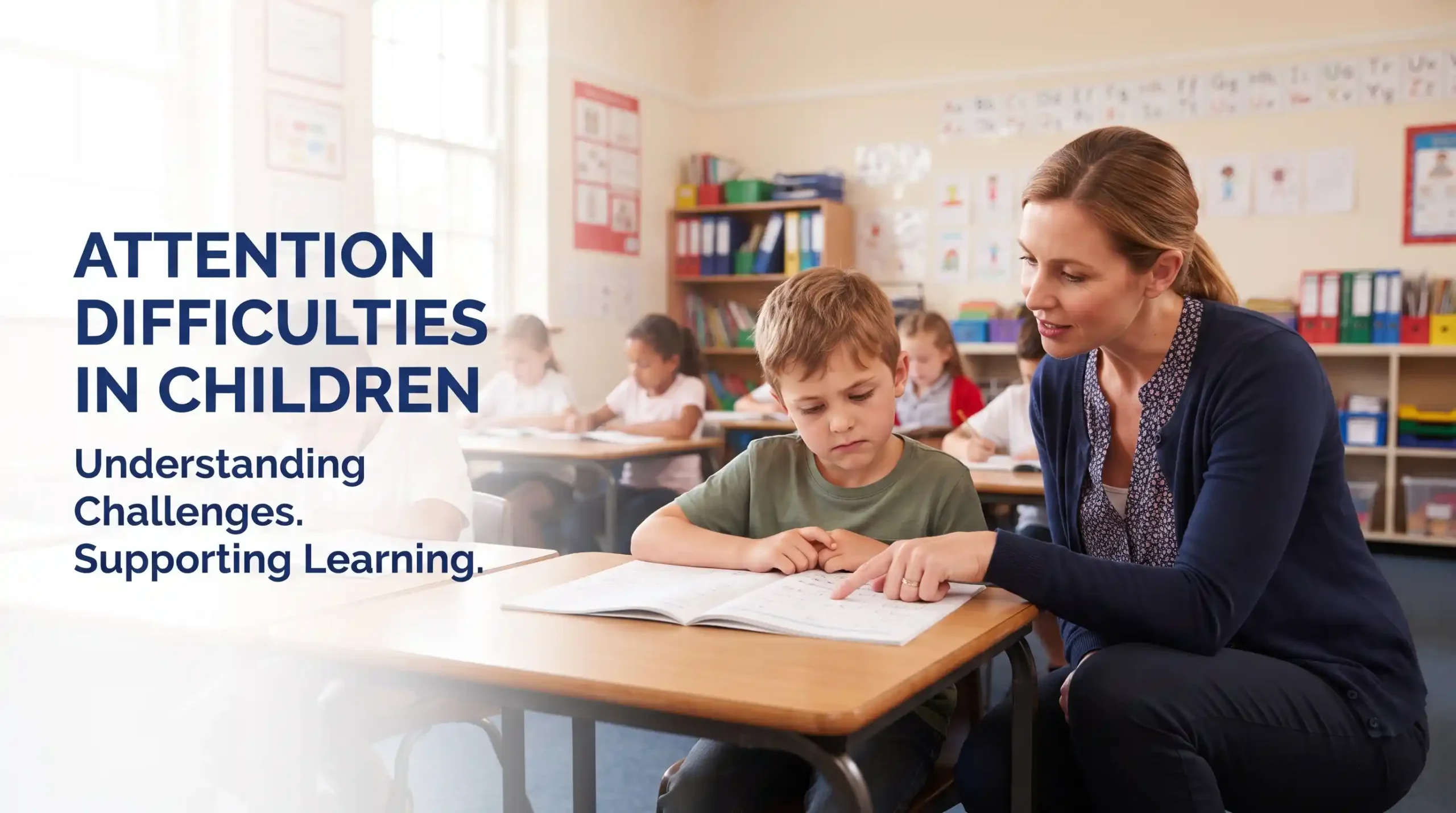
Quick answer: Attention difficulties in children means regularly struggling to focus on tasks, listen to instructions, stay organised or finish work. Common signs include being easily distracted, forgetting instructions, leaving schoolwork unfinished and losing belongings. Causes range from age and poor sleep to stress, learning difficulties, a noisy classroom or ADHD. It doesn’t mean a child is lazy or careless. Short instructions, smaller tasks, steady routines and good communication between home and school help most. If the difficulties persist, see a doctor or other qualified professional.
You’ve asked your child to put on their shoes, and ten minutes later they’re sitting on the floor, one shoe on, building something out of the other. Or a teacher says, “She’s bright, but she never finishes anything.”
It can be frustrating for everyone. But a child who can’t seem to focus isn’t necessarily being lazy, careless or difficult. Often there’s a reason, and once you find it, you can actually help.
This guide covers the signs of attention difficulties, what might be behind them, and what parents and teachers can do.
What are attention difficulties in children?
Attention difficulties are when a child regularly has trouble focusing on a task, listening to instructions, organising activities or keeping concentration going for a reasonable time.
One child might start homework, then get pulled away by a sound, a toy or something outside the window. Another might understand the lesson perfectly but forget the instructions before finishing the assignment.
Drifting off now and then is a normal part of childhood. Children lose focus when they’re tired, hungry, worried, bored or facing something that feels too hard. It becomes more of a concern when it happens often, keeps going over time and gets in the way of learning or daily life.
Spotting it early means adults can try helpful strategies instead of reaching for criticism or punishment.
What are the common signs of attention difficulties?
They look different in different children. Some are obviously distractible. Others are quiet, but quietly lost. Here’s what to watch for:
- Trouble staying focused. Lessons, reading and homework are hard to stick with. A child may start with enthusiasm and lose steam before finishing.
- Distraction by surroundings. Sounds, movement, chatter or objects pull their attention away, and even small interruptions make it hard to get back on track.
- Forgetting instructions. They may manage the first step, then forget what comes next.
- Unfinished schoolwork. They understand the subject but leave work half done, skip questions or make mistakes from rushing or losing their place.
- Difficulty organising. Books, supplies and homework go missing. They may not know where to begin.
- Avoiding concentration-heavy tasks. Long passages, lengthy worksheets or multi-step activities feel overwhelming, so they put them off or switch to something more fun.
- Missing parts of lessons. They lose the thread of explanations or discussions and need instructions repeated.
These signs alone don’t make a diagnosis. Children develop at different rates, and similar behaviours can have different explanations.
What causes attention difficulties in children?
There’s no single cause. Looking at the whole child helps you work out what to try next.
Age and development
Young children are still building the ability to direct their attention, manage impulses and follow complex instructions. Expectations should fit their age and stage.
Lack of sleep
Too little or poor-quality sleep affects concentration, memory, mood and classroom participation. A steady bedtime routine and enough sleep can make a noticeable difference for some children.
Stress and worries
Family changes, friendship troubles or school pressure make it harder to concentrate. Emotional concerns sometimes look like distraction, withdrawal or unfinished work.
Learning difficulties
A child who struggles with reading, writing, language or maths may find certain lessons especially tough. What looks like “not paying attention” can actually be frustration or not understanding the material.
The classroom environment
Noise, frequent interruptions, unclear instructions and long activities without breaks all make focusing harder. A structured room with clear expectations helps children know what’s required.
ADHD
Attention-deficit/hyperactivity disorder is one possible explanation for ongoing attention difficulties. It can involve inattention, hyperactivity, impulsivity or a mix.
But not every distracted child has ADHD. A qualified healthcare professional can look at the child’s developmental history, behaviour in different settings and how much it affects daily life.
Other health or developmental factors
Hearing or vision problems, some health conditions and developmental or emotional concerns can also affect attention. If difficulties continue, a professional assessment can help identify what’s contributing.
How can parents help?
Consistent routines, open conversation and small practical changes at home go a long way.
1. Set up a calm study space. Pick a comfortable spot with good light and few distractions. Keep only what’s needed for the task on the desk. Switch off unnecessary screens and lower background noise if you can.
2. Split homework into small steps. “Finish all your homework” is a lot. Try this instead:
- Do five maths questions
- Take a short break
- Read one page
- Answer the reading questions
Small goals are easier to start, and your child can see their progress.
3. Keep instructions short and clear. Give one or two at a time. Ask your child to say them back in their own words so you know they’ve landed. A written checklist or a simple picture reminder helps too.
4. Stick to a routine. Regular times for waking, getting ready, homework, play, meals and sleep help children know what to expect. A simple daily schedule cuts confusion and makes switching between activities easier.
5. Build in movement breaks. Stretching, a walk or a bit of active play between focused tasks gives children a helpful reset. Breaks should never feel like a punishment.
6. Praise effort and progress. Be specific. Rather than “Good job,” try “You stayed with that reading and finished the whole page. Well done.” Noticing what they actually did builds confidence and encourages good habits.
7. Protect sleep and healthy habits. A regular bedtime, balanced meals, physical activity and sensible screen-time limits support general well-being and may help some children cope better with daily demands.
How can teachers support students with attention difficulties?
1. Think about seating. Where appropriate, place the child away from major distractions while still keeping them part of the class. Never use seating to embarrass or isolate.
2. Split lessons into sections. Break long activities into shorter parts with clear goals. Explain, check understanding, then guide students through the next step.
3. Use visuals. Put instructions on the board, give written task lists and use simple visual schedules. These help many students, not only those with attention difficulties.
4. Check understanding privately. A child can look like they’re listening and still miss key information. Ask them to explain the first step, or quietly check in during independent work.
5. Allow suitable movement. Short classroom jobs, stretching or planned breaks can help children return to learning, as long as they don’t disrupt others.
6. Give useful feedback. Focus on the skill or behaviour the child can improve. Avoid labels like “lazy,” “careless” or “problem student.” Clear expectations, encouragement and consistent support build better learning habits.
7. Talk to parents. If attention difficulties keep affecting a child’s progress, share specific observations: when it happens, what seems to help and whether it shows up in other activities. Then you can monitor progress together and decide whether more support is needed.
How do attention difficulties affect schoolwork?
They affect far more than sitting still. They can change how children listen, remember instructions, organise information, finish assignments and show what they know.
A student might understand a maths concept but miss a step in a multi-part question. Another might know the answer but struggle to organise a written response.
That’s why it’s worth looking beyond marks alone. Consider classroom participation, task completion, understanding, confidence and what kind of support helps this child make progress.
At School of Scholars, parents can learn more about our approach and learning environment. Our Knowledge Hub is a good place to start for guidance on education and child development.
When should parents seek professional advice?
Consider talking to a professional if attention difficulties:
- Last over time rather than showing up occasionally
- Significantly interfere with learning, relationships or daily routines
- Appear in more than one setting, such as home and school
- Cause ongoing frustration, distress or loss of confidence
- Come with concerns about language, learning, sleep, hearing or vision
A family doctor, paediatrician, child psychologist or other qualified professional can assess the situation and recommend support. Teachers can share what they see in class, but they shouldn’t diagnose medical or developmental conditions. A good assessment looks at the child’s overall development, individual circumstances and experiences in different settings.
Asking for advice doesn’t mean something is wrong with your child. It’s a way to understand their needs and find useful support.
How can parents and schools work together?
Children do best when the adults around them take a consistent, supportive approach. You can:
- Share specific observations about attention and finishing tasks
- Find the activities where your child focuses more easily
- Agree on a few realistic goals
- Use similar reminders and routines where practical
- Review progress and adjust when needed
- Get professional guidance if difficulties continue
Say a child struggles to remember homework instructions. The teacher could give a written checklist, and the parent could use the same one at home. Consistency makes expectations clearer and cuts down on frustration.
Frequently asked questions
What are the common signs of attention difficulties in children?
Common signs include being easily distracted, forgetting instructions, struggling to finish tasks, losing belongings and having trouble organising schoolwork. These should be considered in context. On their own, they aren’t enough for a diagnosis.
What causes attention difficulties in children?
Possible factors include age and development, poor sleep, stress, learning difficulties, distractions in the environment, ADHD and other health or developmental concerns. The cause can differ from child to child.
Do attention difficulties always mean a child has ADHD?
No. Children struggle with attention for many reasons. ADHD is one possibility, but a qualified healthcare professional must assess the child’s symptoms, developmental history and functioning before diagnosing it.
How can parents improve a child’s concentration?
Create a quiet study area, break tasks into smaller steps, give clear instructions, keep routines consistent, offer movement breaks and praise effort and progress.
How can teachers help students with attention difficulties?
Give short instructions, divide work into manageable parts, reduce distractions, use visual reminders, check understanding, allow suitable movement and keep in regular contact with parents.
Can lack of sleep affect a child’s attention?
Yes. Too little or disrupted sleep can affect concentration, memory, mood and daily functioning. If sleep problems persist, discuss them with a healthcare professional.
When should parents seek professional help?
When attention difficulties persist, affect learning or daily life, appear in several settings or cause significant distress. A professional can help explore possible causes and the right support.
Can children with attention difficulties succeed academically?
Yes. With their needs identified and suitable strategies, educational support and professional guidance where required, children with attention difficulties can learn, progress and show what they can do.
Final thoughts
Attention difficulties can affect learning, confidence and everyday routines, but they don’t define a child’s intelligence or potential.
When parents and teachers recognise the signs, think about the possible causes, build supportive routines and work as a team, children can develop useful skills and take part in learning with more confidence. They need patience, understanding and a fair chance to succeed. And if difficulties continue, the right professional guidance can help your family find the way forward.
Disclaimer: This article is for general educational purposes only and doesn’t replace professional medical, psychological or developmental advice.