
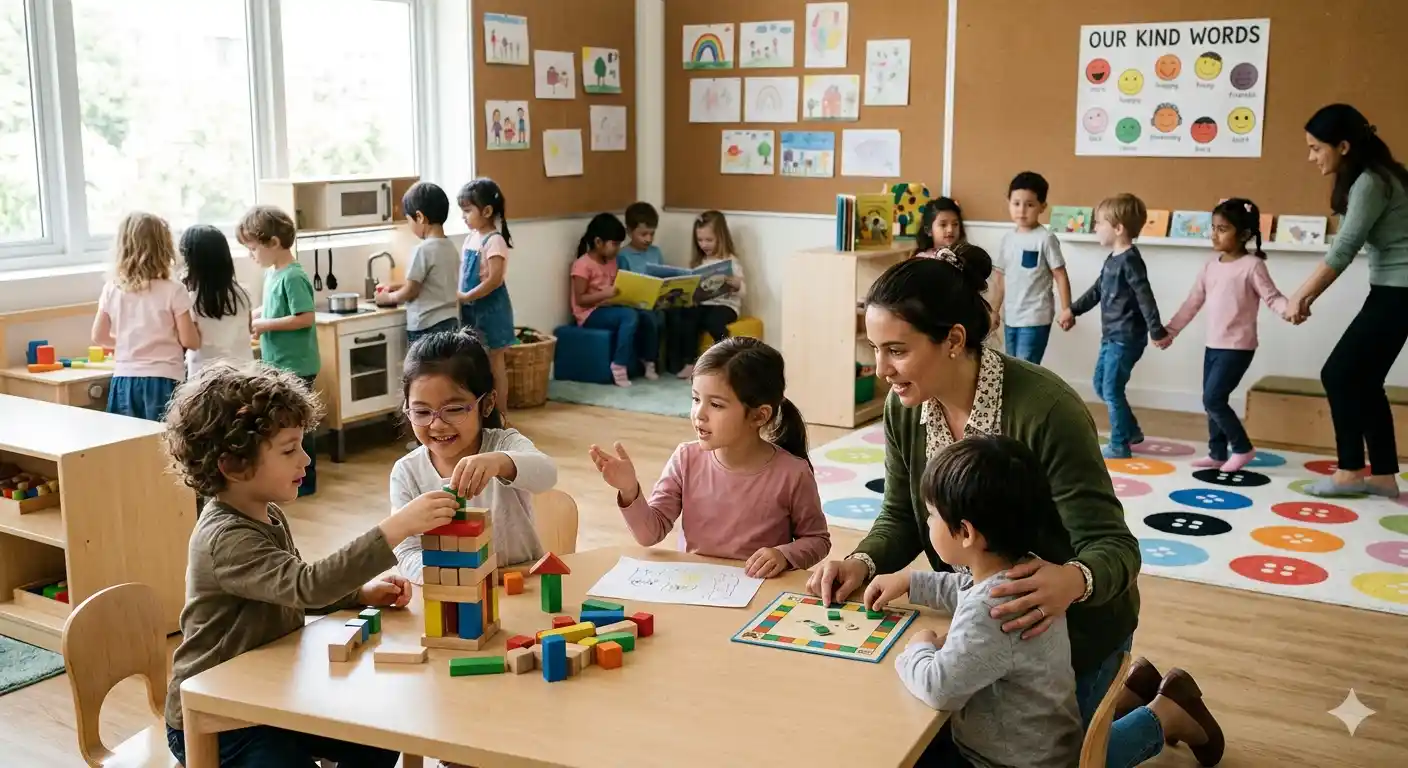
Introduction
Early childhood is one of the most important stages in a child’s development. During these years, children do not only learn academic basics—they also learn how to interact with others, express emotions, and build relationships.
That is why social skills in early years is a key focus in modern education systems.
At School of Scholars, we believe that strong social skills are just as important as academic learning because they shape how children communicate, collaborate, and grow in life.
What Are Social Skills in Early Childhood?
Social skills refer to the ability to interact effectively with others. In early years, these skills include:
- Sharing and taking turns
- Communication and listening
- Cooperation in group activities
- Understanding emotions
- Respecting others
- Problem-solving in social situations
These skills help children build healthy relationships throughout their lives.
Why Social Skills Are Important for Young Children
Developing social skills at an early age helps children:
- Build confidence in communication
- Develop emotional intelligence
- Adapt to school environments easily
- Improve teamwork abilities
- Reduce behavioral challenges
- Build friendships and positive relationships
Children with strong social skills often perform better academically and socially.
How Schools Develop Social Skills in Early Years
Modern schools use a variety of teaching strategies to help children develop social behavior naturally.
1. Group Learning Activities
Group activities are one of the most effective ways to develop social skills.
Children learn how to:
- Work in teams
- Share materials
- Listen to others
- Respect different opinions
Simple classroom tasks encourage cooperation and communication.
2. Play-Based Learning
Play is a powerful learning tool in early education.
Through play, children naturally learn:
- Sharing
- Negotiation
- Conflict resolution
- Patience
Games and role-play activities help children understand real-life social situations.
3. Communication Activities
Teachers encourage children to express themselves through:
- Storytelling
- Show-and-tell sessions
- Classroom discussions
- Circle time conversations
These activities improve vocabulary, confidence, and communication skills.
4. Role-Playing Activities
Role-play helps children understand different social roles.
Examples include:
- Playing shopkeeper and customer
- Acting as teacher and student
- Family role-play activities
This helps children develop empathy and understanding of others.
5. Emotional Learning and Awareness
Schools teach children to identify and express emotions.
Children learn how to:
- Recognize feelings
- Express emotions in a healthy way
- Understand others’ emotions
- Manage frustration and anger
This builds emotional intelligence from an early age.
6. Collaborative Projects
Teachers assign simple group projects such as:
- Drawing together
- Building craft models
- Group storytelling
- Class presentations
These activities encourage teamwork and cooperation.
7. Outdoor and Physical Activities
Outdoor play helps children interact freely.
It supports:
- Team sports
- Group games
- Physical coordination
- Social bonding
Children learn to follow rules and work as a team.
Role of Teachers in Social Development
Teachers play a crucial role in shaping a child’s social behavior.
They:
- Guide children during interactions
- Encourage positive communication
- Teach conflict resolution
- Model respectful behavior
- Support emotional development
A supportive teacher creates a safe environment where children feel confident to express themselves.
Benefits of Strong Social Skills in Early Years
Children who develop strong social skills early enjoy long-term benefits:
Better Emotional Intelligence
They understand and manage emotions effectively.
Strong Relationships
They build healthy friendships and social connections.
Improved Classroom Behavior
They follow instructions and participate positively.
Higher Confidence
They feel comfortable speaking and interacting with others.
Better Academic Performance
Socially confident students perform better in group learning environments.
School of Scholars Approach
At School of Scholars, we focus on holistic early childhood development.
Our approach includes:
- Interactive classroom activities
- Group learning experiences
- Emotional development support
- Play-based education
- Communication skill-building exercises
We believe that children grow best in an environment that balances learning, creativity, and social interaction.
Conclusion
Social skills development in early years is essential for building confident, emotionally intelligent, and well-adjusted individuals.
Through group activities, play-based learning, communication exercises, and teacher guidance, schools play a vital role in shaping a child’s personality.
At School of Scholars, we are committed to helping children not only learn but also grow socially and emotionally preparing them for a successful future in school and life.
Frequently Asked Questions
1. What are social skills in early childhood?
Social skills in early childhood include sharing, communication, listening, teamwork, empathy, and understanding emotions while interacting with others.
2. Why are social skills important for young children?
They help children build confidence, make friends, improve communication, and adjust better in school environments.
3. How do schools develop social skills in early years?
Schools develop social skills through group activities, play-based learning, role-play, storytelling, and collaborative classroom tasks.
4. What role do teachers play in social skill development?
Teachers guide children, encourage positive behavior, teach communication, and help them manage emotions and resolve conflicts.
5. Can social skills affect academic performance?
Yes, children with strong social skills often perform better academically because they participate more confidently in group learning and classroom activities.