
Introduction
Early childhood education is the foundation of a child’s lifelong learning journey. Nursery is the stage where children begin to explore the world, develop communication skills, and build basic cognitive abilities.
At this stage, learning should never feel like pressure. Instead, it should feel like play.
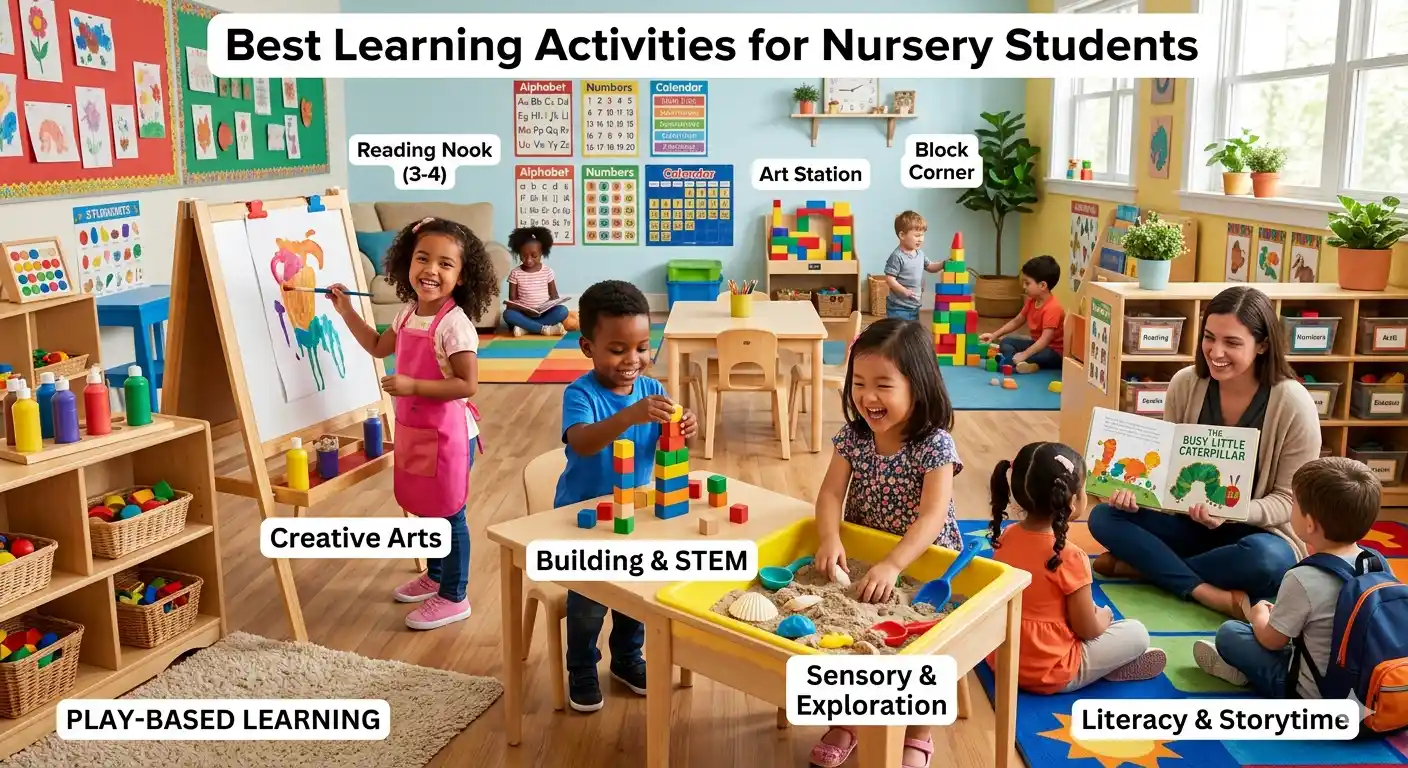
That is why best learning activities for nursery students are designed to be fun, interactive, and engaging while supporting essential development skills.
At School of Scholars, we believe that early learning should focus on curiosity, creativity, and hands-on experiences that help children grow confidently.
Why Learning Activities Matter in Nursery Education
Nursery students learn best through experience, observation, and play-based activities.
Effective learning activities help children:
- Develop communication skills
- Improve motor skills
- Build social interaction abilities
- Enhance creativity and imagination
- Strengthen early cognitive development
These foundational skills prepare children for formal schooling.
Why Montessori Education Is Growing in Karachi
Nursery students learn best through experience, observation, and play-based activities.
Effective learning activities help children:
- Develop communication skills
- Improve motor skills
- Build social interaction abilities
- Enhance creativity and imagination
- Strengthen early cognitive development
These foundational skills prepare children for formal schooling.
Best Learning Activities for Nursery Students
1. Drawing and Coloring Activities
Drawing is one of the most effective early learning activities.
It helps children:
- Recognize colors
- Improve hand-eye coordination
- Express creativity
- Develop focus and patience
Simple coloring books or free drawing exercises are perfect for nursery students.
2. Alphabet Learning Games
Introducing letters through games makes learning fun and memorable.
Activities include:
- Alphabet flashcards
- Letter matching games
- Singing alphabet songs
- Identifying letters in objects
These activities build early literacy skills.
3. Basic Counting Activities
Nursery students can learn numbers through playful counting exercises.
Examples include:
- Counting toys
- Number songs
- Sorting objects by quantity
- Simple number puzzles
These activities develop early math skills.
4. Puzzle and Shape Sorting Games
Puzzles help improve logical thinking and problem-solving.
Shape sorting activities help children understand:
- Different shapes
- Patterns
- Spatial awareness
These games also improve concentration.
5. Music and Rhymes Activities
Music plays an important role in early childhood development.
Nursery students enjoy:
- Nursery rhymes
- Action songs
- Musical games
These activities improve memory, language skills, and listening ability.
6. Sensory Play Activities
Sensory play helps children explore textures, colors, and materials.
Examples include:
- Sand play
- Water play
- Clay modeling
- Rice or bean sorting
This improves sensory development and creativity.
7. Group Play Activities
Group activities help children develop social skills.
These include:
- Sharing games
- Role-playing
- Circle time activities
- Team games
Children learn cooperation and communication.
8. Storytelling Sessions
Storytelling improves imagination and language development.
Teachers or parents can:
- Read picture books
- Use puppets
- Encourage children to retell stories
This builds vocabulary and listening skills.
9. Outdoor Learning Activities
Outdoor play is essential for physical and mental development.
Activities include:
- Running games
- Nature walks
- Simple sports
- Playground activities
These improve physical coordination and confidence.
10. Memory and Matching Games
Memory games improve cognitive development.
Examples include:
- Card matching games
- Picture recognition
- “Find the pair” activities
These activities strengthen focus and recall ability.
Benefits of Learning Activities for Nursery Students
Well-planned learning activities help children:
Improve Cognitive Skills
Children learn to think, analyze, and understand basic concepts.
Develop Creativity
Activities encourage imagination and self-expression.
Build Social Skills
Group activities teach sharing, teamwork, and communication.
Enhance Motor Skills
Hands-on tasks improve fine and gross motor development.
Increase Confidence
Children feel confident when they successfully complete activities.
Role of Schools in Early Learning
Schools play a key role in shaping early childhood education.
A good nursery program should include:
- Play-based learning
- Activity-based curriculum
- Safe and engaging environment
- Creative teaching methods
At School of Scholars, we focus on making early education enjoyable, meaningful, and development-focused.
Conclusion
The best learning activities for nursery students are those that combine fun with education.
Through drawing, counting, storytelling, music, and play-based learning, children develop essential skills that prepare them for future academic success.
At School of Scholars, we believe that early learning should inspire curiosity and joy.
Because when children enjoy learning at a young age, they build a strong foundation for lifelong success.
Frequently Asked Questions
1. What are the best learning activities for nursery students?
The best activities include drawing, coloring, alphabet games, counting exercises, storytelling, puzzles, and outdoor play. These help children learn through fun and interaction.
2. Why are learning activities important for nursery children?
They help develop early literacy, motor skills, creativity, social interaction, and cognitive abilities in a playful and stress-free way.
3. How do nursery activities help in brain development?
Activities like puzzles, memory games, and storytelling improve thinking skills, memory, concentration, and problem-solving abilities.
4. Can learning activities replace traditional teaching in nursery?
In early childhood education, activity-based learning is more effective than traditional teaching because children learn better through play and experience.
5. How often should nursery children do learning activities?
Nursery children should engage in short, daily learning activities (15–30 minutes sessions) combined with free play and rest.