
Introduction
A child’s school should be a place where learning, curiosity, and personal growth thrive. While quality education, experienced teachers, and modern facilities are important, none of these can reach their full potential without one essential foundation—a safe and secure school environment.
Students spend a significant part of their day at school. Parents trust educational institutions to provide not only academic excellence but also a place where children feel protected, respected, and supported. When students feel safe, they are more confident, more engaged in learning, and better able to develop socially and emotionally.
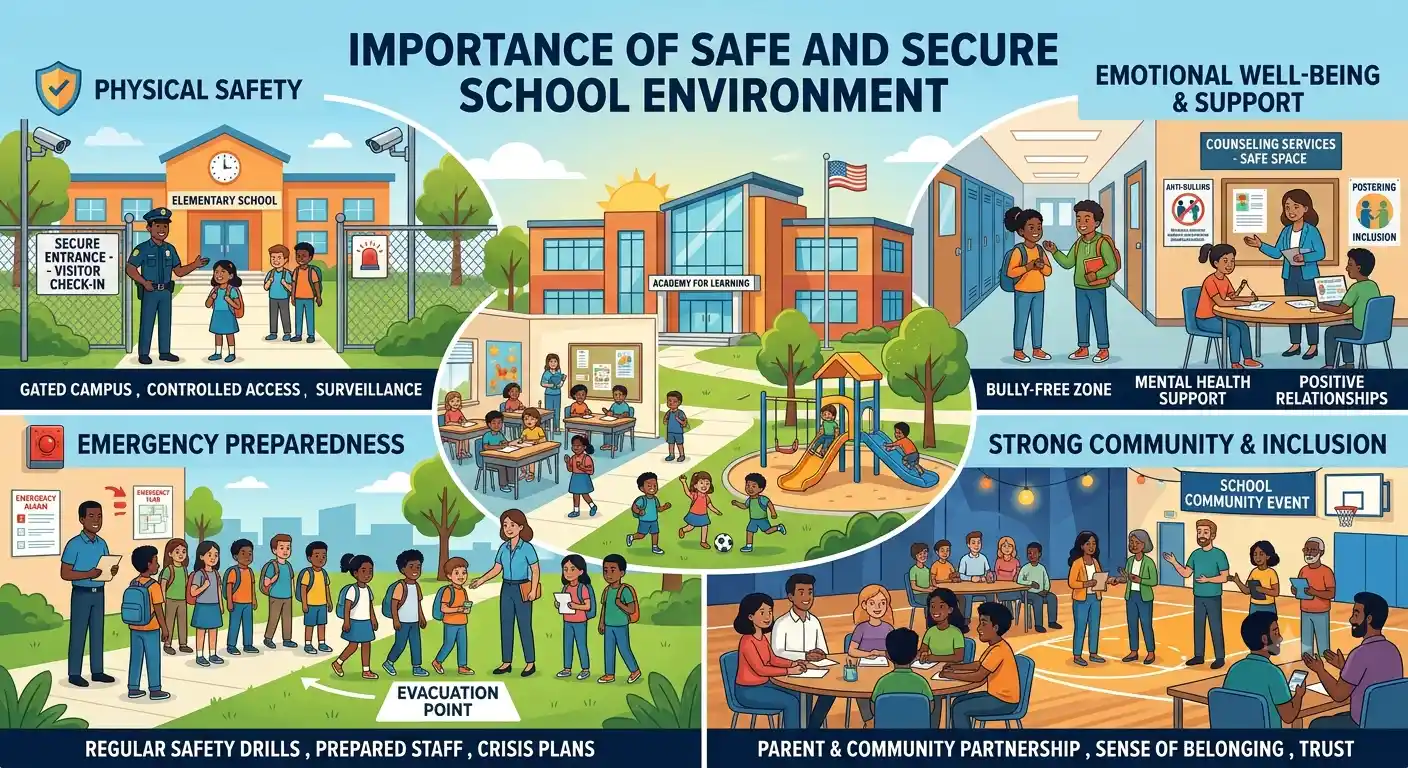
Today, school safety extends beyond locked gates and security cameras. It includes emotional well-being, positive relationships, digital safety, emergency preparedness, and creating an inclusive environment where every child feels valued.
At School of Scholars, we believe that a secure learning environment is the foundation upon which confident learners and responsible future leaders are built.
What Is a Safe and Secure School Environment?
A safe and secure school environment is one where students can learn without fear of physical harm, bullying, discrimination, or emotional distress.
It combines physical security with emotional support, creating a positive atmosphere where children feel comfortable participating, asking questions, and expressing themselves.
A secure school environment includes:
- Safe classrooms and playgrounds
- Qualified and responsible staff
- Emergency response procedures
- Anti-bullying policies
- Positive student-teacher relationships
- Respect for diversity
- Digital safety awareness
- Clean and healthy facilities
When these elements work together, students can focus on learning rather than worrying about their safety.
Why School Safety Matters
School safety directly influences academic achievement, emotional development, and overall well-being.
Children who feel protected are more likely to:
- Attend school regularly
- Participate in classroom discussions
- Build friendships
- Explore new ideas
- Develop confidence
- Achieve better academic results
A secure environment reduces anxiety and allows students to focus on reaching their full potential.
Physical Safety in Schools
Physical safety is the first aspect most parents consider when selecting a school.
Educational institutions should have systems in place to protect students throughout the school day.
Important physical safety measures include:
Secure Campus Access
Schools should control who enters and exits the campus through monitored gates, visitor registration systems, and trained security personnel.
Restricted access helps protect students while maintaining a safe learning environment.
Classroom Safety
Classrooms should be well-maintained, clean, ventilated, and equipped with age-appropriate furniture and learning materials.
Electrical systems, laboratory equipment, and classroom technology should be regularly inspected to ensure student safety.
Emergency Preparedness
Every school should have clear procedures for emergencies such as:
- Fire incidents
- Medical emergencies
- Natural disasters
- Evacuation situations
Regular emergency drills help students and staff respond calmly and efficiently when unexpected situations occur.
Health and Hygiene
Healthy students learn better.
Schools should promote good hygiene through:
- Clean drinking water
- Sanitized classrooms
- Well-maintained washrooms
- Regular cleaning schedules
- Health awareness programs
A healthy environment reduces illness and supports consistent attendance.
Emotional Safety Is Just as Important
Physical protection alone is not enough.
Students also need emotional security to develop confidence and resilience.
An emotionally safe school encourages:
- Respectful communication
- Kindness
- Inclusion
- Acceptance
- Empathy
- Positive relationships
Children who feel emotionally supported are more willing to participate in class, ask questions, and take healthy academic risks.
Preventing Bullying
Bullying can significantly affect a child’s confidence, mental health, and academic performance.
A safe and secure school environment includes clear anti-bullying policies that encourage students to report concerns without fear.
Schools can reduce bullying by:
- Promoting kindness and respect
- Teaching conflict resolution
- Encouraging open communication
- Training teachers to identify warning signs
- Supporting affected students promptly
Creating a culture of respect benefits every student.
The Impact of Safety on Learning
Research consistently shows that students perform better when they feel secure.
A safe environment improves:
- Concentration
- Attendance
- Classroom participation
- Motivation
- Creativity
- Collaboration
- Academic achievement
Students who feel valued are more likely to enjoy learning and develop positive attitudes toward school.
Benefits of a Safe School Environment
A secure educational setting supports every aspect of student development.
Some key benefits include:
| Benefit | Impact on Students |
|---|---|
| Physical Safety | Reduces accidents and protects student well-being |
| Emotional Security | Builds confidence and self-esteem |
| Better Attendance | Encourages regular participation |
| Improved Learning | Increases concentration and academic performance |
| Positive Relationships | Strengthens trust between students and teachers |
| Mental Well-being | Reduces stress and anxiety |
| Social Development | Encourages teamwork, empathy, and respect |
| Parent Confidence | Builds trust in the school’s commitment to student welfare |
Building a Positive School Culture
Safety is not created by rules alone it is built through culture.
A positive school culture encourages students to:
- Respect one another
- Celebrate diversity
- Support classmates
- Communicate openly
- Take responsibility for their actions
When schools promote kindness, responsibility, and inclusion, students feel like valued members of a caring community.
A strong school culture contributes significantly to creating a safe and secure school environment where every child has the opportunity to succeed.
The Role of Teachers in Creating a Safe School Environment
Teachers play one of the most important roles in maintaining a safe and secure school environment. Beyond delivering lessons, they are mentors, role models, and trusted adults who help students feel respected, heard, and supported.
A caring teacher can identify early signs of emotional distress, bullying, or learning difficulties and take appropriate action before small concerns become larger problems.
Effective teachers contribute to school safety by:
-
Building positive relationships with students
-
Encouraging respectful classroom behavior
-
Promoting inclusion and empathy
-
Addressing conflicts fairly and promptly
-
Creating a classroom where every student feels valued
-
Supporting students’ emotional well-being
When students trust their teachers, they are more likely to ask for help and participate confidently in school life.
The Role of Parents in School Safety
Creating a secure learning environment is a shared responsibility between schools and families.
Parents can support school safety by:
-
Encouraging regular attendance
-
Teaching respectful behavior
-
Discussing online safety
-
Staying involved in school activities
-
Communicating openly with teachers
-
Reporting concerns when necessary
When parents and educators work together, children benefit from consistent guidance and support both at home and at school.
Digital Safety in Modern Schools
Technology has transformed education, making digital safety an essential part of a safe and secure school environment.
Students increasingly use laptops, tablets, educational apps, and online learning platforms. While these tools provide valuable learning opportunities, they also require responsible use.
Schools should educate students about:
-
Safe internet browsing
-
Protecting personal information
-
Recognizing online scams
-
Preventing cyberbullying
-
Respecting digital etiquette
-
Using artificial intelligence responsibly
Teaching digital citizenship helps students become responsible technology users both inside and outside the classroom.
School Policies That Promote Safety
Strong policies provide clear expectations for students, teachers, and parents.
Important school policies often include:
-
Anti-bullying guidelines
-
Child protection procedures
-
Emergency response plans
-
Visitor management systems
-
Health and hygiene protocols
-
Digital safety policies
-
Student behavior expectations
Regular review and communication of these policies help ensure everyone understands their role in maintaining a safe learning environment.
Modern Security Measures in Schools
Today’s schools combine trained staff with modern technology to improve campus security.
Common security measures include:
-
CCTV surveillance in common areas
-
Controlled campus entry points
-
Visitor identification procedures
-
Trained security personnel
-
Fire alarms and extinguishers
-
First-aid facilities
-
Emergency communication systems
-
Transportation safety procedures
These measures create an environment where students can focus on learning with confidence.
How School of Scholars Promotes Student Safety
At School of Scholars, student well-being is at the heart of everything we do.
We believe that a safe and secure school environment allows children to learn confidently, develop meaningful relationships, and achieve their full potential.
Our commitment includes:
-
Qualified and caring educators
-
Well-maintained classrooms and facilities
-
Positive student-teacher relationships
-
Respectful and inclusive learning culture
-
Technology-supported learning with responsible digital practices
-
Health, hygiene, and emergency preparedness
-
Open communication with parents
By combining academic excellence with a strong focus on student welfare, we create an environment where every child feels protected, respected, and encouraged to succeed.
Tips for Parents When Evaluating School Safety
Choosing the right school involves more than reviewing academic results.
Parents should consider questions such as:
-
Are security procedures clearly implemented?
-
Does the school have anti-bullying policies?
-
Are classrooms clean and well maintained?
-
How does the school communicate with parents?
-
Are emergency procedures practiced regularly?
-
Does the school support students’ emotional well-being?
-
How are digital learning and online safety managed?
These questions help parents make informed decisions when selecting the best learning environment for their children.
Conclusion
A safe and secure school environment is the foundation of quality education. When students feel physically protected, emotionally supported, and respected by those around them, they are more confident, engaged, and motivated to learn.
School safety extends far beyond security gates and surveillance systems. It includes positive relationships, inclusive classrooms, emotional well-being, responsible technology use, and strong collaboration between teachers, parents, and school leaders.
As education continues to evolve, schools must remain committed to creating environments where every child feels safe enough to explore ideas, ask questions, make mistakes, and grow into a confident individual.
At School of Scholars, we are dedicated to providing a nurturing, secure, and inspiring learning environment that supports academic excellence while prioritizing every student’s well-being. Because when children feel safe, they are empowered to learn, lead, and achieve their dreams.
Frequently Asked Questions
1. Why is a safe and secure school environment important?
A safe and secure school environment helps students focus on learning, improves attendance, supports emotional well-being, and builds confidence by ensuring they feel protected and respected.
2. What makes a school safe for students?
A safe school includes secure campus access, trained staff, emergency preparedness, anti-bullying policies, clean facilities, positive student-teacher relationships, and effective digital safety practices.
3. How can parents evaluate a school’s safety?
Parents should review the school’s security measures, emergency procedures, anti-bullying policies, hygiene standards, communication systems, and commitment to students’ emotional well-being.
4. How do teachers contribute to school safety?
Teachers create a safe learning environment by building trusting relationships, promoting respectful behavior, identifying student concerns early, managing classrooms effectively, and supporting emotional development.
5. How does School of Scholars ensure a safe and secure learning environment?
School of Scholars provides qualified educators, secure facilities, positive classroom cultures, health and safety practices, emergency preparedness, responsible technology use, and strong collaboration with parents to create a secure learning experience.