
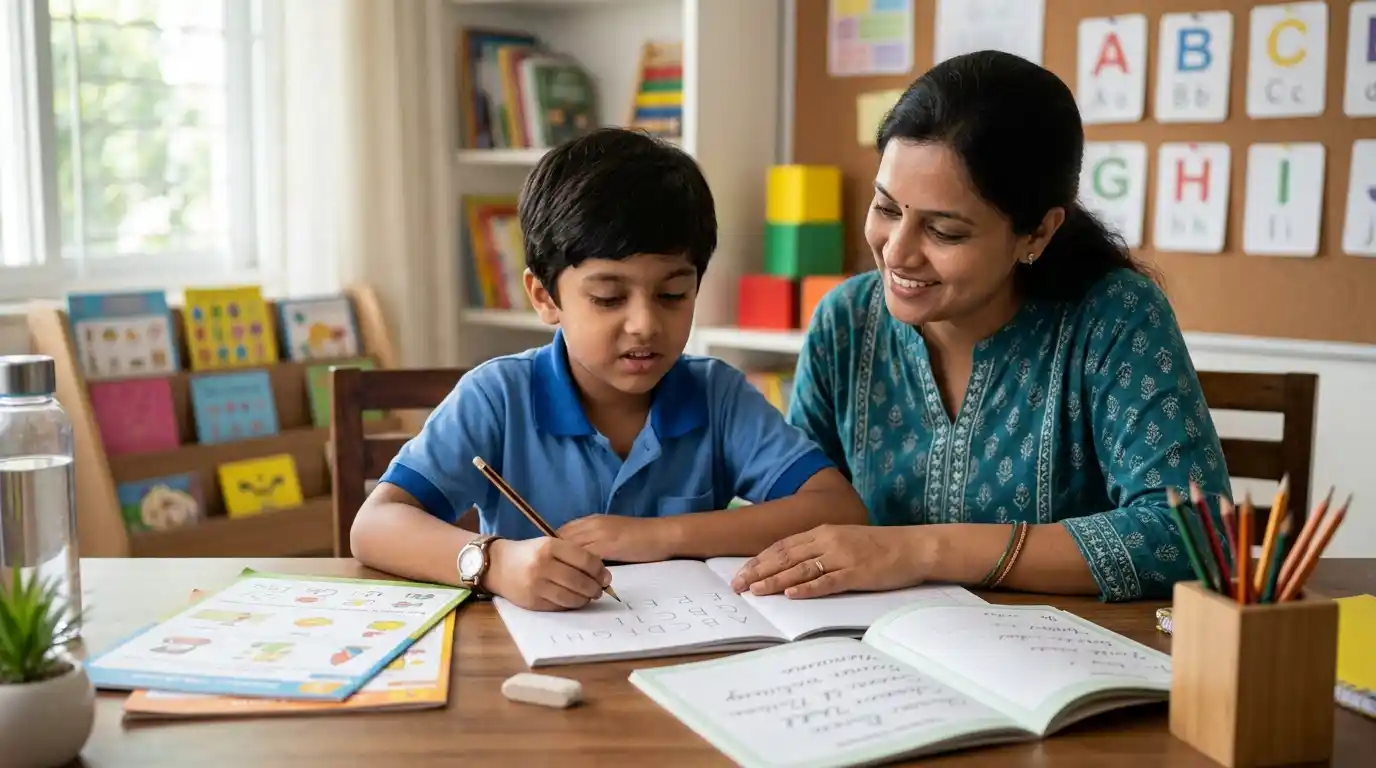
If homework time turns into a battle every time writing is involved the sighing, the eraser marks everywhere, the “I don’t know what to write” you’re dealing with something a lot of parents quietly struggle with too.
Writing is one of those skills that feels simple from the outside but is actually made up of several moving parts working together: forming letters, spelling words correctly, building sentences, organizing thoughts, and physically controlling a pencil long enough to get it all down. A child can be sharp, articulate, and full of ideas verbally, and still hit a wall the moment they have to put those same ideas on paper.
Writing difficulties can show up in handwriting, spelling, sentence-building, writing speed, or simply organizing thoughts on the page. The causes vary quite a bit from child to child which is exactly why figuring out the specific sticking point matters more than trying generic fixes.
What Do Writing Difficulties Actually Look Like?
At its core, a writing difficulty means a child has ongoing trouble with one or more parts of the writing process not just an occasional bad day with a pencil.
You might see it show up as trouble forming letters correctly, an awkward or uncomfortable pencil grip, handwriting that varies wildly in size and shape, poor spacing between words, spelling mistakes that don’t seem to improve, difficulty stringing together full sentences, trouble organizing ideas, forgetting what they meant to write mid-sentence, writing painfully slowly, or simply struggling to finish written schoolwork at all.
Here’s the part that trips up a lot of parents: a child can explain a concept beautifully out loud and then completely freeze the moment they need to write the same thing down. That gap between what they know and what they can get onto paper is often the real issue not a lack of understanding.
What’s Actually Causing It?
There’s no single explanation here. Different kids run into different walls, and sometimes more than one at once.
Fine Motor Skills Haven’t Caught Up Yet
Writing depends on small, precise movements in the fingers, hand, and wrist. A child whose fine motor skills are still developing might struggle to hold a pencil comfortably, control its movement, form letters cleanly, draw basic shapes, or simply keep writing for more than a few minutes without their hand getting tired. That physical fatigue alone can make writing feel like a chore before a single word gets written.
Handwriting Itself Is the Struggle
Some kids just haven’t found consistency yet letters that shift wildly in size, spacing that drifts, writing that wanders above or below the line, or a writing direction that changes mid-sentence. This is often more about motor control and practice than anything else.
Spelling Doesn’t Stick
Spelling asks a lot of a young brain remembering sounds, letter patterns, and how words are actually built. A child who struggles here might drop letters, mix them up, spell the same word three different ways in one paragraph, or blank entirely on words they’ve written a hundred times before.
The Words Just Won’t Come Out Right
Writing isn’t just letters it’s choosing the right words and shaping them into sentences that make sense. A child with language difficulties might know exactly what they want to say and still struggle to find the words for it, or end up with sentences that don’t quite connect the way they intended.
Ideas Are There, Organization Isn’t
Some kids have plenty to say and no idea how to structure it. They might not know how to start a paragraph, what should come next, how one idea connects to another, or how to wrap things up. It’s less about having nothing to write and more about not knowing how to arrange what’s already there.
Attention Keeps Slipping
Writing takes real, sustained focus. A child who struggles to hold that focus might lose their train of thought, forget the instructions halfway through, skip parts of an assignment, or take far longer than expected on something that should be quick. This can affect writing even when the child fully understands the material the difficulty isn’t academic, it’s attentional.
Signs Worth Keeping an Eye On
You might notice:
- Very slow handwriting for their age
- Real difficulty forming letters cleanly
- Letter sizes that vary a lot within the same piece of writing
- Poor spacing between words
- Handwriting that’s genuinely hard to read
- Frequent, persistent spelling mistakes
- Missing or reversed letters
- Trouble copying from a board or book
- Avoiding writing tasks whenever possible
- Getting physically tired quickly while writing
- Complaining that their hand hurts
- Difficulty forming complete sentences
- Trouble organizing paragraphs
- Taking noticeably longer than classmates to finish written work
- Visible frustration or anxiety around writing
Seeing one or two of these occasionally isn’t cause for alarm every child has rough days. What actually matters is whether these problems keep showing up consistently and are genuinely affecting your child’s learning or confidence.
Does Messy Handwriting Automatically Mean Something’s Wrong?
Not at all.
Kids develop handwriting control at very different speeds. Messy handwriting can simply come down to limited practice, an awkward pencil grip, fine motor skills still catching up, or just needing more time than other kids to smooth things out. None of that is a red flag on its own.
Where it’s worth paying closer attention is when messy handwriting shows up alongside spelling struggles, slow writing speed, language difficulties, or trouble organizing thoughts. That combination is more likely to mean extra support would genuinely help.
Could This Be Dysgraphia?
Possibly but it’s worth being careful about jumping to conclusions.
Dysgraphia is a specific learning difficulty that can affect handwriting and writing skills more broadly. Kids with dysgraphia often struggle with handwriting itself, spelling, writing speed, organizing written work, or getting their ideas down on paper even with plenty of practice behind them.
But not every child with messy handwriting or writing struggles has dysgraphia. The only reliable way to know is through a proper evaluation — not by matching symptoms to a checklist, however tempting that shortcut feels when you’re trying to figure things out quickly.
What Can You Actually Do to Help?
The encouraging part is that small, consistent efforts at home genuinely add up over time.
Start with short writing sessions, not marathons. Instead of a long assignment, try something small and doable three sentences about their day, a quick description of a picture, a few lines about their favorite activity, or even a simple shopping list. Build up the length gradually as their confidence grows.
Work on fine motor skills through play. Drawing, coloring, puzzles, cutting with child-safe scissors, building with blocks, and playing with clay all quietly strengthen the same hand control that writing depends on without it feeling like a chore.
Make writing genuinely fun sometimes. Not every writing activity needs to be homework. Try short stories, a simple journal, comic strips, homemade greeting cards, shopping lists, labeling their own drawings, or writing about a favorite character. Lowering the stakes tends to lower the resistance too.
Help them plan before they start. Kids who struggle to organize their ideas often do better with a simple structure in place first. Ask: What do you want to say first? What comes next? How do you want to finish? A basic beginning-middle-end shape can take a lot of the guesswork out of getting started.
Praise progress, not perfection. Correcting every single mistake can quietly teach a child to fear writing altogether. Notice effort and improvement out loud, and work on trouble spots gradually rather than all at once. Confidence tends to grow faster than perfect grammar does.
When Is It Time to Bring in Extra Support?
It’s worth reaching out for professional guidance if writing difficulties stick around for a while, are clearly affecting school performance, keep causing frustration, are pushing your child to avoid schoolwork altogether, seem to be chipping away at their confidence, show up alongside reading or spelling struggles, or make written work noticeably harder than verbal expression for them.
A teacher or qualified learning professional can help pinpoint exactly which writing skills are the sticking point and what kind of support would actually move the needle rather than guessing at home indefinitely.
Struggling With Writing Doesn’t Mean a Child Isn’t Capable
This is worth saying plainly: a child who struggles with writing can still be creative, intelligent, articulate, and academically strong in every other way.
Often the real issue isn’t understanding the material at all — it’s the specific challenge of translating thoughts into written words on a page. Those are genuinely two different skills, and struggling with one says nothing about the other.
With the right support, consistent practice, and patience, most kids do build stronger writing skills over time and just as importantly, they rebuild the confidence that so often takes a hit along the way.
Frequently Asked Questions
Why is my child struggling with writing? It could come down to fine motor difficulties, handwriting challenges, spelling struggles, language development, attention difficulties, or trouble organizing ideas. Pinpointing the specific difficulty is what actually points you toward the right kind of support.
What are the signs of writing difficulties in children? Poor handwriting, inconsistent letter sizing, uneven spacing, slow writing speed, frequent spelling mistakes, trouble forming full sentences, avoiding writing tasks, and difficulty organizing ideas are all common signs worth watching for.
Is poor handwriting a sign of a learning difficulty? Not automatically — plenty of kids just need more time and practice. It’s when poor handwriting shows up alongside spelling, speed, or language difficulties that it’s worth a closer look.
How can parents help a child with writing difficulties? Keep writing sessions short and regular, build in fine motor activities, help them plan their ideas before writing, work on spelling gradually, make writing enjoyable where you can, and focus on progress rather than perfection.
Can children actually improve their writing skills? Yes, absolutely. With regular practice, the right instruction, targeted support, and activities that build handwriting, spelling, vocabulary, sentence structure, and organization, most children make real progress over time.
When should a child get help for writing difficulties? If the struggles persist, are affecting schoolwork, are causing real frustration, or are stopping your child from expressing their ideas effectively despite consistent practice and support at home and school, it’s a reasonable time to seek a proper evaluation.
Conclusion
Writing difficulties in children can come from a lot of different places, and no two kids need exactly the same kind of support. Whether it’s handwriting, spelling, fine motor skills, sentence-building, or organizing ideas that’s getting in the way, catching it early tends to make the whole process feel a lot less stressful for both of you.
The goal was never just to get a child to write more. It’s to help them build the skills and the confidence to actually get their ideas out in whatever form that eventually takes.