
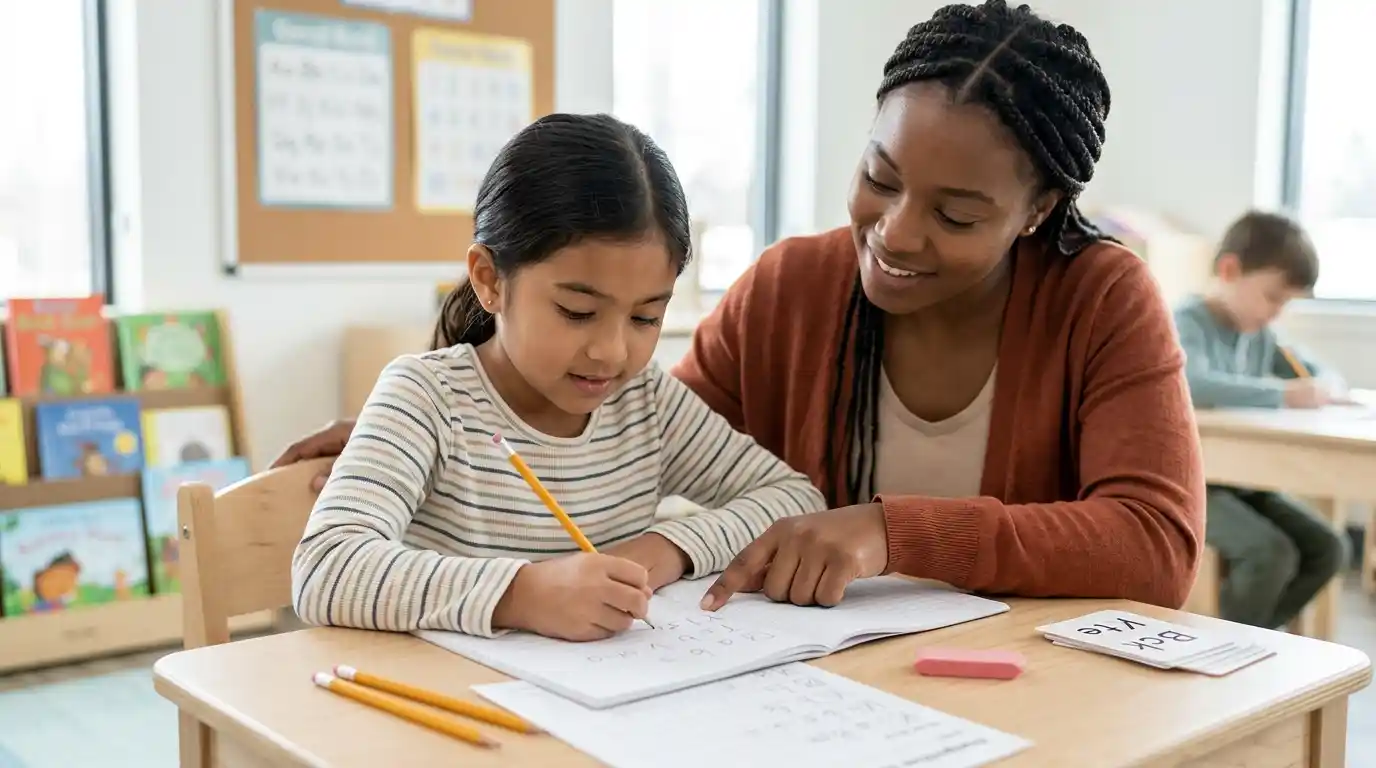
Writing is an important part of a child’s school life. Children use writing to complete homework, answer questions, take notes, share ideas, and communicate what they have learned.
But for some children, writing can be much harder than it appears.
A child may know the answer to a question but struggle to write it down. Their handwriting may be difficult to read, writing may take a very long time, or they may become tired and frustrated after only a short writing task.
These difficulties can sometimes be related to dysgraphia.
Dysgraphia is a learning difficulty that can affect handwriting, spelling, written expression, and the ability to put thoughts into written form. It does not mean a child is lazy or less intelligent. With understanding, appropriate teaching strategies, and the right support, children with writing difficulties can become more confident learners.
What Is Dysgraphia in Children?
Dysgraphia is a learning difficulty that affects writing skills.
A child with dysgraphia may have difficulty with one or more parts of writing, such as:
Handwriting
Spelling
Letter formation
Writing speed
Word spacing
Organizing written ideas
Copying information
Putting thoughts into sentences
Using correct punctuation
Producing written work efficiently
Dysgraphia can look different in every child.
One child may have very messy handwriting but express ideas clearly when speaking. Another may have readable handwriting but struggle to organize thoughts or spell words correctly.
This is why it is important to look at the child’s overall writing pattern rather than one writing mistake.
What Does Dysgraphia Look Like?
A child with dysgraphia may know exactly what they want to say but struggle with the physical or mental process of writing it.
For example, imagine a teacher asks:
“Write five sentences about your favorite animal.”
The child may be able to explain the answer verbally:
“I like dolphins because they are intelligent, friendly, and live in the ocean.”
But when asked to write the same idea, the child may:
Take a long time to start
Write very slowly
Have difficulty forming letters
Make frequent spelling mistakes
Leave large or uneven spaces between words
Forget punctuation
Cross out many words
Become tired
Become frustrated
The problem may not be a lack of ideas.
The difficulty may be with the writing process itself.
Common Signs of Dysgraphia in Children
Dysgraphia can appear differently depending on the child’s age and development.
Here are some common signs parents and teachers may notice.
1. Difficult-to-Read Handwriting
The child’s handwriting may be:
Very messy
Uneven
Difficult to read
Inconsistent in size
Difficult to keep on the writing line
Written with unusual spacing
The child may also produce better handwriting when writing very slowly but struggle when asked to write quickly.
2. Slow Writing Speed
Some children take much longer than classmates to complete writing tasks.
They may still be writing when the rest of the class has finished.
This can make homework particularly tiring because even a short assignment may require a lot of time.
3. Inconsistent Letter Formation
A child may write the same letter differently within the same sentence.
For example, the size, shape, or direction of a letter may change from one word to another.
4. Difficulty With Spacing
Children with writing difficulties may have trouble knowing how much space to leave between words.
Their writing may appear crowded together or have unusually large spaces.
5. Frequent Spelling Mistakes
Spelling difficulties can sometimes occur alongside dysgraphia.
A child may:
Leave letters out
Add extra letters
Change the order of letters
Spell the same word differently
Have trouble remembering common spelling patterns
6. Difficulty Copying From the Board
Copying information can be particularly challenging.
A child may need to repeatedly look up at the board, find their place on the page, and then continue writing.
They may lose their place or accidentally skip words.
7. Trouble Organizing Written Ideas
Some children may have excellent ideas when speaking but struggle to organize those ideas on paper.
They may have difficulty deciding:
How to start
What information to include
How to organize paragraphs
How to connect ideas
How to finish the assignment
8. Frequent Erasing and Rewriting
A child may erase words repeatedly because they are unhappy with the handwriting or spelling.
This can make a simple assignment take much longer.
9. Hand Fatigue
Writing requires physical effort.
Some children may complain that their hand hurts or becomes tired during longer writing tasks.
They may hold the pencil very tightly or use an uncomfortable grip.
10. Avoiding Writing Activities
Children who repeatedly struggle with writing may begin avoiding it.
They might say:
“I don’t want to write.”
“My hand hurts.”
“I don’t know what to write.”
“This is too hard.”
Avoiding writing does not necessarily mean a child is lazy.
It may be a sign that writing has become frustrating.
What Causes Dysgraphia?
There is no single cause of dysgraphia.
Writing involves many different skills working together, including language processing, fine-motor coordination, attention, memory, spelling, and organization.
Difficulties in one or more of these areas can make writing challenging.
Dysgraphia may also occur alongside other learning or developmental difficulties.
However, parents should not try to diagnose dysgraphia based only on a list of symptoms.
A qualified professional can assess the child’s individual needs and determine what kind of support may be appropriate.
Is Dysgraphia a Learning Disability?
Dysgraphia is often discussed as a learning difficulty or learning disability involving written expression and handwriting.
However, the exact terminology can vary depending on the educational or clinical system being used.
What matters most is understanding the child’s specific difficulties.
A child who struggles with writing may need support regardless of the label used.
Does Dysgraphia Mean a Child Has Low Intelligence?
No.
Dysgraphia does not mean that a child has low intelligence.
A child may be:
Creative
Curious
Good at mathematics
Excellent at problem-solving
Strong at speaking
Good at understanding stories
Skilled at building or designing things
Yet writing may remain difficult.
This difference between what a child knows and what they can put on paper can sometimes be confusing for parents and teachers.
A child may understand a lesson perfectly but receive a lower grade because they cannot easily demonstrate their knowledge through writing.
Dysgraphia and Handwriting
Handwriting is one of the most noticeable areas of difficulty for some children with dysgraphia.
A child may struggle with:
Holding a pencil comfortably
Forming letters
Maintaining consistent letter size
Keeping letters on the line
Leaving appropriate spaces
Writing at an age-appropriate speed
Copying information accurately
However, handwriting difficulty alone does not automatically mean dysgraphia.
Young children naturally need time to develop handwriting skills.
The important factor is whether difficulties are persistent and significantly interfere with everyday school activities.
Dysgraphia and Spelling
Writing and spelling are closely connected.
A child may know how a word sounds but still struggle to write the correct letters.
For example, they may write:
“frend” instead of “friend.”
Repeated spelling difficulties can make writing assignments even more challenging.
Children may benefit from direct spelling instruction, word patterns, visual supports, and regular practice.
Dysgraphia and Written Expression
Written expression is more than handwriting.
A child has to:
Think of an idea
Organize the idea
Choose words
Build sentences
Spell words
Write the letters
Use punctuation
Review the work
For some children, managing all these steps at the same time can be overwhelming.
This is why a child may tell a detailed story verbally but produce only a few short sentences when asked to write.
How Does Dysgraphia Affect Schoolwork?
Writing difficulties can affect many school subjects.
English and Language
Writing essays, stories, answers, and summaries may take longer.
Science
The child may understand the science concept but struggle to write an explanation.
Mathematics
Even mathematics can become difficult if the child struggles to organize numbers and written calculations.
Social Studies
Long written answers may require more time and effort.
Homework
Assignments that other children finish quickly may take much longer.
This can lead to tiredness and frustration.
How Can Parents Help a Child With Dysgraphia?
Parents can support children by making writing practice manageable and positive.
1. Keep Writing Practice Short
Instead of expecting a child to write for a long period, use short practice sessions.
For example:
10 minutes of writing → short break → another activity
The appropriate amount of practice depends on the child’s age and individual needs.
2. Encourage Writing Without Pressure
Try to make some writing activities enjoyable.
Children can write:
Short stories
Shopping lists
Birthday cards
Comic strips
Simple journals
Notes to family members
The goal is to give the child opportunities to write without making every activity feel like a test.
3. Let the Child Explain Ideas Verbally
If your child understands a topic but struggles to write, ask them to explain their answer aloud.
This can help you see the difference between their knowledge and their writing ability.
4. Use Visual Supports
Writing guides can help children organize their work.
For example, a paragraph planner can include:
Topic → Main Idea → Supporting Detail → Example → Conclusion
Simple structures can make writing feel less overwhelming.
5. Practice Handwriting Skills
Short handwriting exercises can help children practice:
Letter formation
Spacing
Writing on lines
Consistent letter size
Practice should be appropriate for the child’s developmental level.
6. Praise Progress
Instead of focusing only on mistakes, recognize improvements.
You might say:
“Your letters are staying on the line much better today.”
or:
“You organized your ideas really clearly.”
Positive feedback can help children feel more confident.
How Can Teachers Support Children With Dysgraphia?
Teachers can make writing tasks more manageable by adjusting how information is presented and how children demonstrate their knowledge.
Helpful strategies may include:
Giving clear written and verbal instructions
Breaking large assignments into smaller steps
Allowing appropriate additional time
Providing writing templates
Using graphic organizers
Reducing unnecessary copying
Providing printed notes when appropriate
Allowing keyboarding or assistive technology when appropriate
Giving feedback on one or two important skills at a time
Allowing the child to explain some answers verbally when appropriate
Support should be based on the child’s individual educational needs.
Can Technology Help Children With Dysgraphia?
Technology can sometimes reduce the physical demands of writing.
Depending on the child’s needs, useful tools may include:
Keyboarding
Speech-to-text tools
Word processors
Digital organizers
Spell-checking tools
Audiobooks
Educational writing applications
Technology should not necessarily replace handwriting practice.
Instead, it can provide another way for children to communicate their ideas while they continue developing writing skills.
Dysgraphia vs. Messy Handwriting
Not every child with messy handwriting has dysgraphia.
Children can have messy handwriting for many reasons.
They may:
Be learning handwriting
Write too quickly
Need more practice
Have poor pencil habits
Lose concentration
Feel tired
Dysgraphia involves more persistent difficulties that can significantly interfere with writing.
If you are concerned, speak with your child’s teacher or an appropriate qualified professional rather than trying to diagnose the problem yourself.
Dysgraphia vs. Dyslexia
Dysgraphia and dyslexia are different learning difficulties, although they can occur together.
Dyslexia mainly affects reading and language-related skills.
Dysgraphia mainly affects writing and written expression.
A child may experience one, the other, or difficulties with both reading and writing.
For example, a child with dyslexia may struggle to decode words when reading, while a child with dysgraphia may struggle to produce written work.
Some children experience overlapping learning difficulties, which is why an individual assessment can be helpful.
When Should Parents Seek Help?
Parents may want to discuss writing difficulties with a teacher or qualified professional when a child consistently:
Has very difficult-to-read handwriting
Writes much more slowly than expected
Complains of hand pain or fatigue during writing
Struggles to copy text
Has persistent spelling difficulties
Cannot organize written ideas
Avoids writing activities
Becomes very frustrated by writing
Performs much better verbally than in written work
Continues to struggle despite appropriate classroom support
Seeking help does not mean something is wrong with the child.
It means you are trying to understand how the child learns and what support may help.
How Is Dysgraphia Identified?
There is no single test that can identify every case of dysgraphia.
A qualified professional may look at different aspects of a child’s performance, including:
Handwriting
Writing speed
Spelling
Fine-motor skills
Written expression
Language skills
Academic performance
Developmental history
Classroom performance
Depending on the child’s difficulties, assessment may involve professionals with different areas of expertise.
Parents can start by speaking with their child’s teacher, school support team, pediatrician, psychologist, occupational therapist, or another appropriately qualified professional.
Can Children With Dysgraphia Improve Their Writing?
Yes.
Children can develop stronger writing skills when they receive appropriate instruction and support.
Progress may involve:
Better handwriting
Improved letter formation
More comfortable pencil use
Better spelling
Improved writing organization
Increased writing speed
Greater confidence
Every child develops at a different pace.
The goal should be meaningful progress rather than comparing the child with classmates.
Helping a Child Build Confidence
Academic difficulties can affect how children see themselves.
A child who repeatedly struggles with writing may begin to think:
“I’m bad at school.”
Parents and teachers can help change this message.
Instead, remind the child:
“Writing is difficult for you right now, but we can find ways to make it easier.”
Also encourage activities where the child feels successful.
These might include:
Art
Sports
Building
Music
Technology
Puzzles
Storytelling
Science experiments
A child’s writing difficulty is only one part of who they are.
Simple Writing Activities for Children
Parents can make writing practice more engaging with simple activities.
Write a Short Story
Give the child three words and ask them to create a short story.
For example:
Dog + Rain + School
Make a Shopping List
Ask your child to write five things needed from the grocery store.
Create a Comic
Let the child draw pictures and add short speech bubbles.
Write a Birthday Card
Encourage the child to write a short personal message.
Keep a Small Journal
The child can write one or two sentences about their day.
These activities provide writing practice without making the experience feel like traditional homework.
Frequently Asked Questions About Dysgraphia in Children
What is dysgraphia in children?
Dysgraphia is a learning difficulty that can affect handwriting, spelling, writing speed, and written expression. Children may know what they want to say but struggle to communicate those ideas effectively through writing.
What are the main signs of dysgraphia?
Common signs include difficult-to-read handwriting, slow writing, inconsistent letter formation, unusual spacing, spelling difficulties, trouble copying text, poor written organization, and frustration or fatigue during writing tasks.
Does dysgraphia mean a child is not intelligent?
No. Dysgraphia does not indicate low intelligence. A child may have strong reasoning, creativity, speaking, and problem-solving skills while experiencing significant writing difficulties.
Can dysgraphia affect spelling?
Yes. Some children with dysgraphia have difficulty spelling words correctly, remembering spelling patterns, or organizing letters within words.
Can dysgraphia affect handwriting?
Yes. Handwriting is one of the areas that may be affected. A child may struggle with letter formation, spacing, size, alignment, or writing speed.
How can parents help a child with dysgraphia?
Parents can use short writing sessions, provide encouragement, practice handwriting skills, use visual organizers, allow children to explain ideas verbally, and work with teachers and qualified professionals to identify appropriate support.
Can technology help children with dysgraphia?
Technology can sometimes help children communicate their ideas more easily. Depending on individual needs, tools such as keyboards, speech-to-text, word processors, and digital organizers may be useful.
Can children with dysgraphia improve?
Yes. With appropriate instruction, practice, strategies, and support, children can improve their writing skills and develop greater confidence.
Is dysgraphia the same as dyslexia?
No. Dyslexia mainly affects reading and language-related skills, while dysgraphia mainly affects writing and written expression. Some children may experience both.
When should I seek help for my child’s writing difficulties?
Consider speaking with a teacher or qualified professional if writing difficulties are persistent, significantly interfere with schoolwork, cause ongoing frustration, or continue despite appropriate instruction and practice.
Final Thoughts
Dysgraphia can make writing challenging, but writing difficulty does not define a child’s intelligence or potential.
A child may have wonderful ideas, strong communication skills, and excellent problem-solving abilities while struggling to put those ideas on paper.
The most helpful approach is to understand the difficulty, avoid negative labels, provide appropriate support, and give the child opportunities to experience success.
Parents and teachers can work together to make writing more manageable through structured practice, visual tools, technology when appropriate, and positive encouragement.
Most importantly, children need to know that needing extra help with writing does not make them less capable.
Every child learns differently, and the right support can help a child find a way to communicate their ideas with confidence.