
Introduction
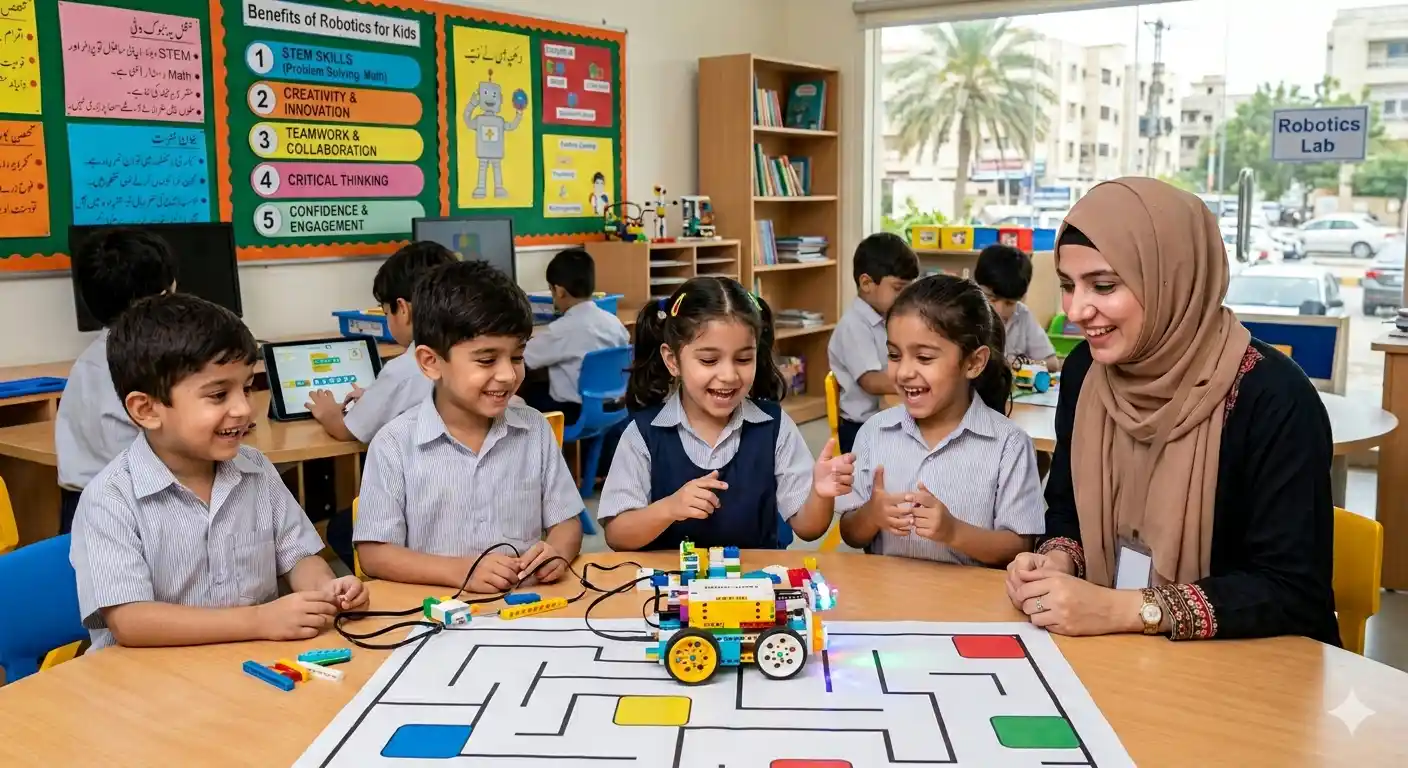
Benefits of robotics for kids in early education are becoming increasingly important as schools move toward modern, technology-driven learning systems. Early exposure to robotics helps children understand how technology works in a fun, interactive, and practical way.
Instead of relying only on textbooks, students learn by building, experimenting, and solving real-world problems. This hands-on approach improves creativity, logical thinking, and foundational STEM skills from an early age.
Institutions like School of Scholars are encouraging innovative learning methods that prepare children for future careers in science and technology.
Visit School of Scholars
What is Robotics for Kids?
Robotics for kids involves teaching basic engineering, coding, and problem-solving through simple robot-building activities.
Children learn:
- How machines move and function
- Basic programming concepts
- Logical thinking
- Team collaboration
- Problem-solving techniques
It turns complex technology into a fun and engaging learning experience.
Top Benefits of Robotics for Kids in Early Education
1. Improves Problem-Solving Skills
One of the biggest benefits of robotics for kids in early education is developing strong problem-solving abilities.
Children learn how to:
- Identify problems
- Break them into smaller parts
- Test different solutions
- Improve outcomes
This builds critical thinking from an early age.
2. Enhances Creativity and Innovation
Robotics encourages children to design and build their own projects.
They can:
- Create moving robots
- Design smart systems
- Experiment with ideas
This boosts imagination and innovative thinking.
3. Builds Strong STEM Foundation
Robotics naturally combines:
- Science
- Technology
- Engineering
- Mathematics
This early exposure helps children understand complex subjects more easily in higher grades.
4. Develops Coding Skills Early
Coding is becoming a basic literacy skill in the digital world.
Through robotics, kids learn:
- Sequencing
- Logic building
- Basic programming
- Algorithm thinking
This prepares them for advanced tech learning in the future.
5. Improves Teamwork and Communication
Most robotics activities are group-based.
Children learn to:
- Share ideas
- Work in teams
- Solve problems together
- Communicate effectively
These are essential life skills.
6. Boosts Confidence and Motivation
When children successfully build a robot, it gives them a sense of achievement.
This increases:
- Confidence
- Motivation to learn
- Curiosity
- Engagement in studies
Robotics Learning Structure for Kids
| Age Group | Robotics Level | Skills Developed |
|---|---|---|
| 5–7 years | Basic kits | Creativity, curiosity |
| 8–10 years | Simple coding | Logic, sequencing |
| 11–13 years | Advanced kits | Engineering basics |
| 14+ years | AI robotics | Programming, automation |
Real-Life Applications for Kids
Robotics helps children connect learning with real-world situations such as:
- Smart home systems
- Traffic management
- Healthcare robots
- Environmental solutions
- Smart farming tools
This makes learning more meaningful and practical.
Why Schools Should Focus on Robotics Early
Introducing robotics in early education ensures students develop strong foundational skills before entering higher grades.
Schools like School of Scholars are adopting modern teaching methods to help students grow in a future-ready learning environment.
Challenges in Early Robotics Education
Some common challenges include:
- Cost of robotics kits
- Lack of trained teachers
- Limited resources in schools
- Awareness among parents
However, these challenges are gradually improving as more schools adopt STEM-based education.
Future of Robotics for Kids
The future of robotics education is very promising. It includes:
- AI-based learning tools
- Smart classrooms
- Interactive robots for teaching
- Game-based coding platforms
Children who start early will have a strong advantage in future careers.
Frequently Asked Questions
1. What are the benefits of robotics for kids in early education?
It improves creativity, problem-solving skills, STEM learning, and coding abilities.
2. At what age should kids start robotics?
Children can start robotics as early as 5 years old with simple kits.
3. Is robotics difficult for young children?
No, robotics for kids is designed to be fun, simple, and interactive.
4. How does robotics help in school performance?
It improves logical thinking, attention span, and understanding of science and math.
5. Does robotics prepare kids for future jobs?
Yes, it builds foundational skills for careers in technology, engineering, and AI.