
Introduction
Technology is transforming the way children learn, communicate, and prepare for the future. Among the most exciting developments in modern education is robotics. Schools around the world are introducing robotics programs to help students build critical thinking, creativity, coding skills, and problem-solving abilities.
However, many parents and educators often ask the same question:
What is the best age to start learning robotics in school?
The simple answer is that children can begin learning robotics much earlier than most people think. With age-appropriate activities and tools, students can start developing robotics skills in primary school and gradually progress to more advanced projects as they grow.
In this article, we’ll explore the best age to start learning robotics in school, the benefits of early robotics education, and why robotics is becoming an essential part of future-focused learning.
What Is Robotics Education?
Robotics education involves teaching students how robots work through hands-on activities, programming, engineering concepts, and problem-solving challenges.
Students learn how to:
- Design robots
- Build robotic systems
- Program movements and actions
- Solve real-world challenges
- Apply science, technology, engineering, and mathematics (STEM) concepts
Rather than simply learning theories, students actively create, test, and improve their projects.
This practical learning approach makes robotics one of the most engaging educational subjects available today.
Why Robotics Is Important for Students
Before discussing the ideal age, it is important to understand why robotics education matters.
The future workforce will require skills that go beyond traditional academics.
Robotics helps students develop:
Critical Thinking
Students learn to analyze problems and find logical solutions.
Creativity
Building robots encourages innovation and imaginative thinking.
Coding Skills
Robotics introduces programming concepts in a fun and interactive way.
Teamwork
Many robotics projects require collaboration and communication.
Problem-Solving
Students learn through experimentation, testing, and improvement.
STEM Knowledge
Robotics combines science, technology, engineering, and mathematics into one practical learning experience.
These skills prepare students for future careers and everyday challenges.
The Best Age to Start Learning Robotics in School
Ages 5–7: Early Introduction
Children between the ages of 5 and 7 can begin learning basic robotics concepts through play-based activities.
At this stage, students focus on:
- Building simple models
- Understanding sequences
- Learning cause-and-effect relationships
- Developing logical thinking
Many beginner robotics kits use colorful blocks and visual programming systems designed specifically for young learners.
The goal is not advanced programming but developing curiosity and confidence.
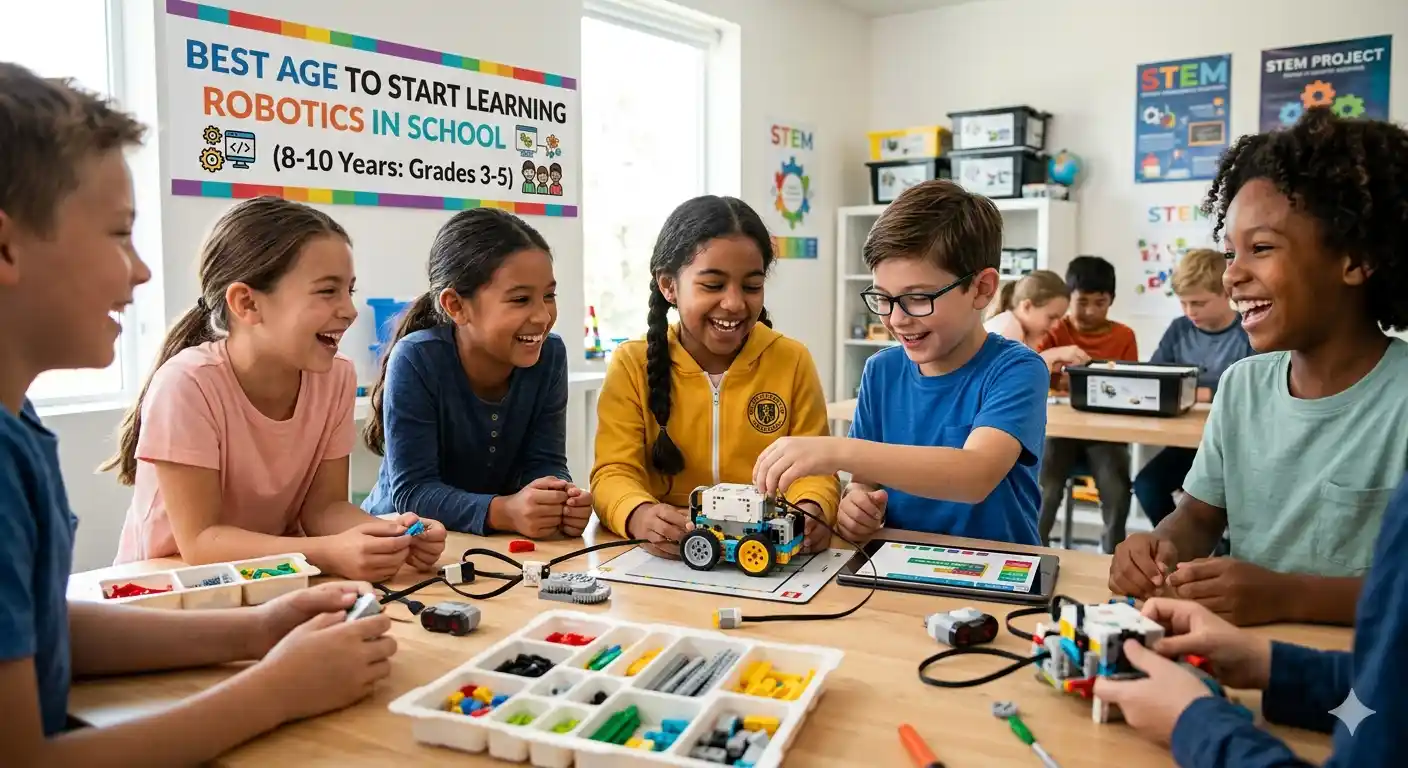
Ages 8–10: Ideal Foundation Stage
Many education experts consider ages 8 to 10 the ideal time to introduce structured robotics learning.
At this age, students can:
- Follow instructions independently
- Understand simple coding concepts
- Build basic robotic projects
- Participate in STEM challenges
Children are naturally curious during this stage and enjoy hands-on learning experiences.
Robotics helps transform that curiosity into practical skills.
Ages 11–14: Advanced Skill Development
Middle school students are ready for more complex robotics projects.
They can learn:
- Programming languages
- Sensors and automation
- Engineering design principles
- Robotics competitions
Students also begin connecting robotics concepts to real-world applications.
This age group often shows significant growth in problem-solving and innovation.
Ages 15 and Above: Career Preparation
Older students can explore advanced robotics, artificial intelligence, machine learning, and automation systems.
At this stage, robotics education becomes closely connected to future career opportunities in:
- Engineering
- Artificial Intelligence
- Software Development
- Automation
- Data Science
- Robotics Engineering
Students gain valuable experience that supports higher education and future employment.
Why Early Robotics Education Works
Introducing robotics at a young age provides several long-term advantages.
Learning Through Play
Children naturally learn through exploration and experimentation.
Robotics turns learning into an engaging activity rather than a traditional classroom lesson.
Building Confidence
Completing robotics projects gives students a sense of accomplishment and encourages them to tackle new challenges.
Developing Future Skills
Technology continues to evolve rapidly.
Students who start learning robotics early gain a strong foundation for future learning.
Encouraging Curiosity
Robotics encourages students to ask questions, test ideas, and discover solutions independently.
These habits support lifelong learning.
How Robotics Supports Academic Success
Robotics education also improves performance in traditional subjects.
Mathematics
Students apply measurements, calculations, and logical reasoning.
Science
Robotics introduces concepts such as energy, motion, and physics.
Technology
Students gain practical experience with digital tools and programming.
Engineering
Building robots teaches design thinking and structural problem-solving.
As a result, students often develop stronger STEM skills overall.
The Role of Schools in Robotics Education
Schools play a critical role in preparing students for the future.
Modern education should not focus solely on textbooks and examinations.
Instead, schools should provide opportunities for:
- Hands-on learning
- Innovation
- Technology exploration
- Creative problem-solving
- STEM education
Robotics programs help create an engaging learning environment where students can apply knowledge in meaningful ways.
Robotics and Future Careers
Many of the fastest-growing careers today involve technology and automation.
Fields such as:
- Artificial Intelligence
- Robotics Engineering
- Software Development
- Cybersecurity
- Data Analytics
- Smart Manufacturing
all benefit from skills developed through robotics education.
Students who start learning robotics early gain a significant advantage in understanding future technologies.
How Parents Can Support Robotics Learning
Parents can encourage robotics education by:
- Supporting STEM activities
- Encouraging curiosity and experimentation
- Providing age-appropriate robotics kits
- Participating in robotics events and competitions
- Choosing schools that offer robotics programs
A supportive learning environment helps students develop confidence and enthusiasm for technology.
Conclusion
So, what is the best age to start learning robotics in school?
While children can begin exploring robotics concepts as early as age five, the ideal foundation-building years are typically between ages 8 and 10. However, it is never too early or too late to start learning robotics.
The key is providing age-appropriate experiences that encourage creativity, problem-solving, and innovation.
As technology continues to shape the future, robotics education is becoming one of the most valuable learning opportunities available to students.
By introducing robotics at an early age, schools can help students develop the skills, confidence, and mindset needed to thrive in a technology-driven world.
The future belongs to creators, innovators, and problem-solvers—and robotics helps students become all three.
Frequently Asked Questions
1. What is the best age to start learning robotics?
Children can start learning basic robotics concepts as early as 5 to 7 years old through play-based activities. However, ages 8 to 10 are often considered the ideal stage for structured robotics education because children can better understand coding, logic, and problem-solving concepts.
2. Is robotics difficult for young children?
No, robotics is designed to be age-appropriate. Many beginner robotics programs use visual programming, simple building blocks, and interactive activities that make learning fun and easy for young learners.
3. How does robotics help students academically?
Robotics improves critical thinking, problem-solving, creativity, and STEM skills. It also helps students apply concepts from mathematics, science, technology, and engineering in practical situations.
4. Do students need coding knowledge before learning robotics?
No. Most beginner robotics courses introduce coding concepts gradually. Students can learn robotics and coding together, even if they have no prior programming experience.
5. Why should schools introduce robotics education?
Schools should introduce robotics because it prepares students for future careers, enhances STEM learning, develops innovation skills, and encourages hands-on problem-solving that is essential in today’s technology-driven world.