
Introduction
Communication is one of the most valuable life skills a child can develop. It influences how students express their ideas, build relationships, solve problems, and succeed both inside and outside the classroom. While academic knowledge is important, the ability to communicate effectively often determines a student’s confidence, leadership potential, and future career success.
Today, schools are no longer focused only on teaching subjects like mathematics, science, and languages. Modern education also emphasizes developing essential soft skills, and among them, communication skills in students play a central role.
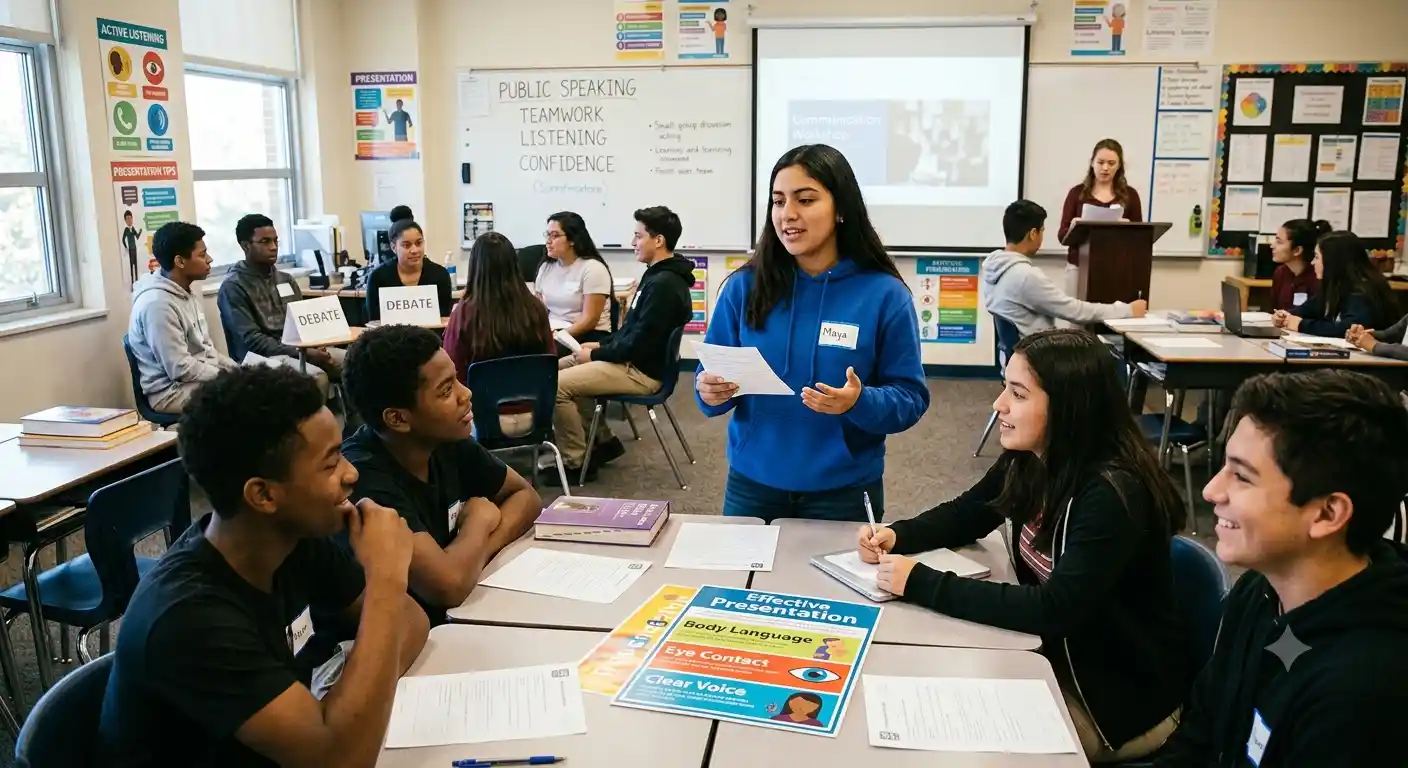
From classroom discussions and presentations to debates, group projects, and extracurricular activities, schools create countless opportunities for students to become confident communicators.
At School of Scholars, we believe that strong communication skills empower students to become successful learners, responsible citizens, and future leaders.
What Are Communication Skills?
Communication skills refer to the ability to express thoughts, ideas, emotions, and information clearly while also listening and responding effectively to others.
Good communication involves much more than speaking.
It includes:
- Verbal communication
- Active listening
- Non-verbal communication
- Written communication
- Public speaking
- Team discussions
- Presentation skills
- Digital communication
Developing these abilities helps students perform better academically while preparing them for future personal and professional success.
Why Communication Skills Matter
Children use communication every day.
Whether answering a teacher’s question, working on a group project, making new friends, or presenting an assignment, communication affects every aspect of school life.
Strong communication skills in students help them:
- Express ideas confidently
- Understand classroom lessons
- Build healthy friendships
- Participate actively in discussions
- Improve academic performance
- Resolve conflicts respectfully
- Develop leadership qualities
Students who communicate effectively often become more confident learners.
How Schools Develop Communication Skills
Schools create structured learning experiences that encourage students to communicate naturally and confidently.
These experiences extend beyond textbooks and allow children to practice real-life interactions every day.
Interactive Classroom Discussions
Instead of relying only on lectures, modern classrooms encourage students to ask questions, share opinions, and participate in meaningful discussions.
Interactive learning helps students:
- Build confidence
- Think critically
- Listen respectfully
- Express opinions clearly
- Learn from different perspectives
Frequent classroom participation strengthens communication over time.
Public Speaking Opportunities
Public speaking is one of the most effective ways to build confidence.
Schools encourage students to speak in front of audiences through:
- Morning assemblies
- Classroom presentations
- Speech competitions
- Storytelling sessions
- Debates
- Project demonstrations
Each opportunity helps students reduce stage fear while improving clarity and confidence.
Group Projects and Collaborative Learning
Modern education encourages teamwork.
Working in groups requires students to:
- Share ideas
- Listen to classmates
- Solve disagreements
- Delegate responsibilities
- Reach common goals
Collaborative learning strengthens both communication and interpersonal skills.
Debate Competitions
Debates teach students how to organize thoughts, support opinions with evidence, and communicate respectfully even when disagreements exist.
Benefits include:
- Critical thinking
- Logical reasoning
- Confidence
- Active listening
- Respectful communication
Debates prepare students for future academic and professional discussions.
Reading and Storytelling Activities
Reading and storytelling significantly improve communication abilities.
Students develop:
- Vocabulary
- Pronunciation
- Fluency
- Listening skills
- Creative thinking
- Self-expression
Storytelling also encourages imagination while making communication enjoyable.
Creative Arts and Drama
Drama, theatre, music, and role-playing encourage students to communicate through both speech and body language.
These activities improve:
- Confidence
- Emotional expression
- Teamwork
- Creativity
- Public speaking
Performing before an audience helps students become more comfortable expressing themselves.
Leadership Opportunities
Schools often provide leadership roles such as:
- Class monitor
- Student council member
- House captain
- Club leader
- Event coordinator
These responsibilities require students to communicate clearly, organize teams, solve problems, and motivate others.
Leadership naturally strengthens communication skills.
Benefits of Strong Communication Skills
Developing communication skills in students provides lifelong advantages.
These include:
- Greater classroom participation
- Improved academic performance
- Increased confidence
- Better teamwork
- Stronger relationships
- Enhanced leadership abilities
- Higher emotional intelligence
- Improved career readiness
Students who communicate effectively are better prepared for university, professional careers, entrepreneurship, and everyday life.
Communication Activities and Their Benefits
| School Activity | Communication Skills Developed |
|---|---|
| Classroom Discussions | Speaking, listening, confidence |
| Debate Competitions | Critical thinking, persuasive speaking |
| Storytelling | Vocabulary, creativity, fluency |
| Drama & Theatre | Public speaking, expression, teamwork |
| Group Projects | Collaboration, problem-solving, leadership |
| Student Council | Leadership, decision-making, communication |
| Morning Assembly | Presentation skills, confidence |
| Reading Activities | Comprehension, vocabulary, communication |
Building Confidence Through Communication
Confidence and communication develop together.
The more opportunities students have to express themselves, the more comfortable they become sharing ideas in academic and social settings.
Schools that encourage participation rather than perfection help students develop the courage to ask questions, present ideas, and contribute meaningfully to discussions.
Over time, these experiences shape confident learners who are ready to communicate effectively in every stage of life.
The Role of Teachers in Developing Communication Skills
Teachers are among the most influential role models in a child’s educational journey. They create classroom environments where students feel comfortable expressing their ideas, asking questions, and participating in discussions.
By encouraging open communication and providing constructive feedback, teachers help students gradually become confident speakers and active listeners.
Teachers strengthen communication skills in students by:
Encouraging classroom participation
Organizing presentations and debates
Asking open-ended questions
Providing positive feedback
Teaching active listening
Promoting respectful discussions
Supporting shy students with confidence-building activities
A supportive teacher inspires students to communicate without fear of making mistakes.
The Role of Parents in Communication Development
Communication skills continue to develop outside the classroom.
Parents can reinforce what children learn at school by creating opportunities for meaningful conversations at home.
Simple activities include:
Reading books together
Encouraging children to share their daily experiences
Asking open-ended questions
Limiting excessive screen time
Playing educational games
Practicing polite conversation
Listening patiently without interrupting
When schools and parents work together, children gain the confidence to communicate effectively in different environments.
Technology and Communication Skills
Technology has transformed the way students communicate.
Interactive learning platforms, educational apps, virtual classrooms, and collaborative digital tools allow students to express ideas in new and engaging ways.
However, schools also teach responsible digital communication by helping students understand:
Online etiquette
Respectful communication
Protecting personal information
Responsible use of social media
Digital collaboration
Critical evaluation of online information
These digital communication skills are increasingly important in higher education and the modern workplace.
Common Challenges Students Face
Not every child develops communication skills at the same pace.
Some students may struggle with:
Fear of public speaking
Low self-confidence
Limited vocabulary
Difficulty expressing emotions
Shyness during group discussions
Anxiety when presenting in front of others
Schools can address these challenges by providing supportive environments where students practice communication regularly without fear of criticism.
Consistent encouragement and positive reinforcement help children overcome these obstacles over time.
How School of Scholars Builds Strong Communicators
At School of Scholars, we believe that effective communication is a lifelong skill that supports academic achievement and personal growth.
Our learning environment provides students with numerous opportunities to strengthen communication skills in students through:
Interactive classroom discussions
Public speaking activities
Debate competitions
Storytelling sessions
Drama and theatre performances
Collaborative group projects
Student leadership opportunities
Cultural and academic events
By combining modern teaching methods with experiential learning, we help students become confident communicators who can express their ideas clearly and respectfully.
Tips for Parents to Improve Communication Skills at Home
Parents play a valuable role in helping children become better communicators. Here are a few practical ways to encourage communication outside the classroom:
Spend time talking with your child every day.
Encourage reading to expand vocabulary.
Ask questions that require more than a “yes” or “no” answer.
Let children share opinions without fear of criticism.
Practice active listening and maintain eye contact.
Encourage participation in storytelling, drama, or family discussions.
Praise effort and confidence rather than perfection.
These simple habits strengthen communication skills and build lasting confidence.
Communication Skills Prepare Students for the Future
In today’s rapidly changing world, employers and universities value communication as one of the most important soft skills.
Students with strong communication abilities are better prepared to:
Present ideas confidently
Lead teams effectively
Solve problems collaboratively
Build professional relationships
Adapt to new environments
Succeed in interviews and presentations
By developing these skills during school years, students gain a strong foundation for lifelong success.
Conclusion
Developing communication skills in students is one of the most valuable investments schools can make in a child’s future. Effective communication helps students express ideas confidently, build meaningful relationships, collaborate with others, and succeed academically and professionally.
Modern schools nurture these skills through interactive classroom discussions, public speaking opportunities, storytelling, debates, leadership programs, creative activities, and teamwork. Combined with encouragement from parents and teachers, these experiences help students become confident, respectful, and articulate individuals.
At School of Scholars, we are committed to creating learning environments where every child has the opportunity to develop strong communication skills alongside academic excellence. By empowering students to communicate with confidence, we prepare them not only for examinations but also for future leadership, higher education, and lifelong success.
Because when students learn to communicate effectively, they gain the confidence to inspire, influence, and make a positive impact wherever life takes them.
Frequently Asked Questions
1. Why are communication skills important for students?
Communication skills help students express ideas clearly, build confidence, improve academic performance, develop relationships, and prepare for future careers.
2. How do schools improve communication skills in students?
Schools use classroom discussions, presentations, debates, storytelling, group projects, drama activities, leadership opportunities, and collaborative learning to strengthen communication skills.
3. What role do teachers play in communication development?
Teachers encourage participation, provide constructive feedback, organize interactive activities, and create supportive classrooms where students feel confident speaking and listening.
4. How can parents help improve their child’s communication skills?
Parents can encourage daily conversations, read with their children, ask open-ended questions, practice active listening, and support participation in school activities that build confidence.
5. How does School of Scholars develop communication skills in students?
School of Scholars promotes communication through interactive teaching methods, public speaking, debates, storytelling, leadership programs, cultural events, and collaborative classroom activities that prepare students for lifelong success.