
Introduction
Education is much more than textbooks, examinations, and classroom lessons. While academic excellence remains important, schools also play a vital role in shaping students into confident, responsible, and well-rounded individuals. One of the most effective ways to achieve this is through school events and extracurricular activities.
The role of school events in student personality development has become increasingly important in modern education. From science fairs and debates to sports competitions, cultural festivals, art exhibitions, and leadership programs, school events provide students with opportunities to discover their talents, build confidence, and develop essential life skills.
These experiences encourage students to step outside their comfort zones, interact with others, and learn valuable lessons that cannot always be taught in traditional classrooms.
At School of Scholars, we believe that every event is an opportunity for students to grow academically, socially, emotionally, and personally.
What Are School Events?
School events are organized activities that take place outside regular classroom instruction to enhance students’ learning experiences.
These activities may be academic, cultural, athletic, social, or community-focused.
Common examples include:
- Annual Day celebrations
- Science and technology exhibitions
- Sports tournaments
- Debate competitions
- Quiz contests
- Art and craft exhibitions
- Drama and theatre performances
- Independence Day celebrations
- Cultural festivals
- Educational trips
- Charity drives
- Leadership workshops
- Robotics competitions
- Environmental awareness campaigns
Each event gives students practical opportunities to learn, collaborate, and showcase their abilities.
Why School Events Matter
Students remember experiences far more than lectures.
Participating in school events allows children to apply classroom knowledge in real-life situations while developing confidence and independence.
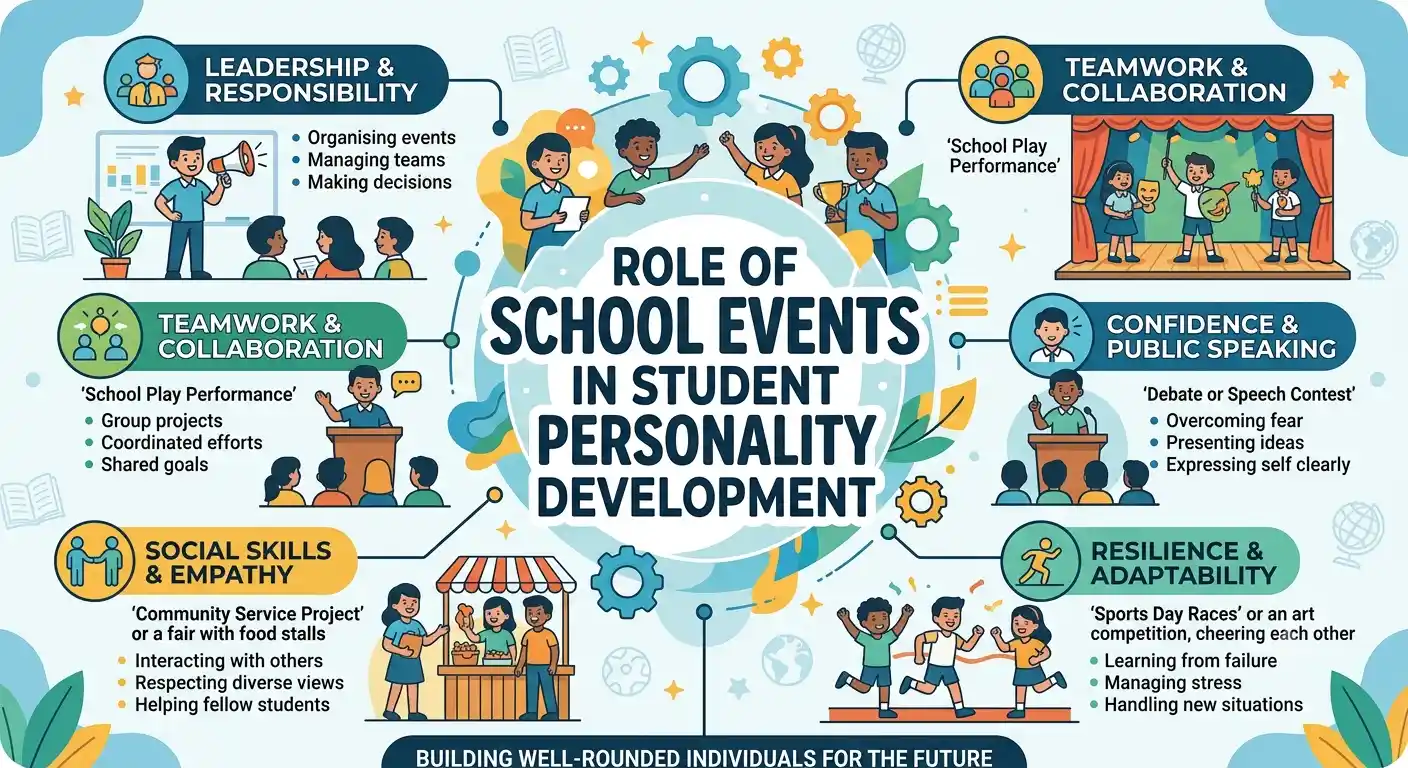
The role of school events in student personality development extends far beyond entertainment. These experiences help students build character, improve communication, and prepare for future academic and professional success.
School events encourage students to:
- Express themselves confidently
- Work with diverse teams
- Solve real-world challenges
- Accept responsibility
- Respect different viewpoints
- Discover hidden talents
- Develop leadership qualities
These experiences create memories while shaping future leaders.
Building Self-Confidence
One of the greatest benefits of school events is increased confidence.
Many students feel nervous speaking in front of others or participating in new activities. School events provide a supportive environment where they can gradually overcome fear and develop self-belief.
Whether delivering a speech, performing on stage, presenting a science project, or competing in a sports event, students gain confidence every time they step forward.
As confidence grows, students become more willing to participate in classroom discussions, ask questions, and take on leadership roles.
Improving Communication Skills
Strong communication skills are essential for success in education and future careers.
School events encourage students to:
- Deliver presentations
- Participate in debates
- Perform in dramas
- Host school assemblies
- Collaborate during group activities
- Interact with teachers, classmates, and visitors
These experiences help students express ideas clearly while improving listening, public speaking, and interpersonal communication.
Developing Leadership Qualities
Leadership is learned through experience.
School events allow students to take responsibility by organizing activities, managing teams, coordinating projects, and solving unexpected challenges.
Leadership opportunities may include:
- Student council responsibilities
- Event management teams
- House captains
- Club leaders
- Sports team captains
- Volunteer coordinators
These responsibilities teach accountability, planning, decision-making, and teamwork.
Encouraging Teamwork and Collaboration
Success in today’s world depends on the ability to work with others.
Most school events require students to cooperate toward shared goals.
During collaborative activities, students learn to:
- Respect different opinions
- Share responsibilities
- Resolve disagreements
- Support teammates
- Celebrate collective achievements
These skills become valuable throughout higher education and professional life.
Enhancing Creativity
Creativity flourishes when students have opportunities to explore ideas freely.
Art competitions, storytelling, music performances, robotics projects, and innovation challenges encourage students to think beyond textbooks.
Creative events help students:
- Develop imagination
- Explore new interests
- Solve problems creatively
- Express emotions positively
- Build confidence in their unique abilities
Modern education increasingly values creativity alongside academic achievement.
Learning Time Management and Responsibility
Preparing for school events requires planning and discipline.
Students learn to balance:
- Academic responsibilities
- Event preparation
- Team meetings
- Practice sessions
- Deadlines
Managing these responsibilities helps students develop organizational skills that benefit them throughout life.
Benefits of School Events for Personality Development
| School Event | Personality Skills Developed |
|---|---|
| Debate Competitions | Communication, confidence, critical thinking |
| Sports Activities | Teamwork, discipline, resilience |
| Science Exhibitions | Innovation, curiosity, problem-solving |
| Cultural Programs | Creativity, self-expression, confidence |
| Student Council | Leadership, responsibility, decision-making |
| Art & Craft Competitions | Creativity, patience, imagination |
| Community Service | Empathy, social responsibility, compassion |
| Educational Trips | Observation, independence, adaptability |
Emotional and Social Growth
The role of school events in student personality development also includes emotional intelligence.
Students learn how to:
- Handle success with humility
- Accept failure positively
- Encourage classmates
- Build friendships
- Develop empathy
- Respect diversity
These emotional and social skills contribute significantly to personal growth and future success.
Creating Lifelong Memories
Many adults remember school events long after they forget examination scores.
Performing on stage, winning competitions, organizing festivals, and celebrating achievements create lasting memories that strengthen confidence and school pride.
These experiences often inspire students to pursue future interests and careers.
The Role of Teachers in School Events
Teachers are the driving force behind successful school events. They do much more than organize activities they mentor, motivate, and encourage students to step outside their comfort zones.
A supportive teacher helps students discover hidden talents, overcome stage fear, and develop confidence through active participation.
Teachers contribute by:
- Guiding students during event preparation
- Encouraging teamwork and collaboration
- Identifying individual strengths
- Promoting fair play and discipline
- Providing constructive feedback
- Celebrating every student’s progress
By creating opportunities for participation, teachers help students build lifelong skills that extend far beyond academics.
The Role of Parents in Student Development
Parents also play an important role in maximizing the benefits of school events.
When parents encourage participation rather than focusing only on academic grades, children develop confidence and a willingness to try new experiences.
Parents can support their children by:
- Attending school events
- Appreciating their efforts
- Encouraging participation
- Helping them manage time effectively
- Celebrating improvement rather than perfection
A strong partnership between parents and schools creates a positive environment where students feel motivated to grow.
School Events Prepare Students for the Future
The workplace of tomorrow requires more than technical knowledge.
Employers increasingly value individuals who can:
- Communicate confidently
- Lead teams
- Think creatively
- Solve problems
- Collaborate effectively
- Adapt to change
The role of school events in student personality development is significant because these experiences naturally develop many of these future-ready skills.
Students who actively participate in extracurricular activities often become more adaptable, confident, and capable of handling real-world challenges.
School Events and Holistic Education
Holistic education focuses on developing the whole child rather than academic performance alone.
School events contribute to holistic development by strengthening:
- Intellectual abilities
- Emotional intelligence
- Social skills
- Leadership qualities
- Creativity
- Physical well-being
- Moral values
When education combines classroom learning with meaningful experiences, students become balanced individuals prepared for lifelong success.
Why School of Scholars Encourages Student Participation
At School of Scholars, we believe education should inspire students to grow both inside and outside the classroom.
Our calendar includes a variety of academic, cultural, creative, sporting, and community-based activities that help students build confidence and practical life skills.
We encourage every student to participate because each event provides valuable opportunities to:
- Discover new talents
- Improve communication skills
- Develop leadership qualities
- Build meaningful friendships
- Strengthen teamwork
- Learn responsibility
- Celebrate creativity
Our goal is to create an educational environment where students enjoy learning while becoming confident, compassionate, and responsible individuals.
Tips for Parents to Encourage Participation
Parents can help children benefit from school events by following a few simple practices:
- Encourage participation without putting pressure on performance.
- Celebrate effort as much as achievement.
- Allow children to explore different interests.
- Help them prepare while promoting independence.
- Discuss what they learned after each event.
- Support healthy confidence rather than unhealthy competition.
Positive encouragement helps children view every event as a valuable learning experience.
The Long-Term Impact of School Events
The lessons learned through school events often remain with students for life.
Participation helps children become adults who are:
- Confident speakers
- Responsible leaders
- Effective communicators
- Creative thinkers
- Cooperative team members
- Compassionate citizens
These qualities support success in higher education, professional careers, entrepreneurship, and personal relationships.
The confidence gained from participating in a debate, organizing a science exhibition, or performing in a cultural event often becomes the foundation for future achievements.
Conclusion
The role of school events in student personality development goes far beyond entertainment or extracurricular participation. School events provide valuable opportunities for students to build confidence, strengthen communication skills, develop leadership abilities, improve teamwork, and discover their unique talents.
By participating in academic competitions, cultural programs, sports, community service, and creative activities, students gain practical experiences that prepare them for future challenges. These events complement classroom learning and contribute to the holistic development of every child.
At School of Scholars, we believe education is about nurturing well-rounded individuals who are prepared not only for examinations but also for life. Through meaningful school events and student-centered activities, we help children become confident learners, responsible citizens, and future leaders.
When schools create opportunities for students to participate, explore, and grow, they help shape personalities that thrive in every stage of life.
Frequently Asked Questions
1. Why are school events important for student personality development?
School events help students build confidence, improve communication, develop leadership skills, strengthen teamwork, and discover their talents through practical experiences beyond the classroom.
2. What types of school events contribute to personality development?
Activities such as debates, sports competitions, science fairs, cultural festivals, leadership programs, art exhibitions, educational trips, and community service projects all contribute to students’ personal growth.
3. How do school events improve communication skills?
Students develop communication skills by participating in presentations, debates, stage performances, group discussions, and collaborative activities that encourage clear expression and active listening.
4. What role do teachers play during school events?
Teachers mentor, motivate, and guide students throughout event preparation and participation, helping them develop confidence, teamwork, discipline, and leadership abilities.
5. How does School of Scholars support personality development through school events?
School of Scholars organizes a variety of academic, cultural, sports, and leadership activities that encourage students to build confidence, creativity, communication, teamwork, and responsibility in a supportive learning environment.