Introduction
Education in Pakistan is undergoing a major transformation. With the rapid rise of Artificial Intelligence (AI), automation, and robotics worldwide, schools are now shifting from traditional learning methods toward modern, technology-driven education.
Today, AI and robotics education in Pakistan is no longer limited to a few elite institutions. It is gradually becoming part of mainstream schooling as educators recognize the importance of preparing students for future careers in technology.
At School of Scholars, we believe this shift is essential to equip students with future-ready skills that go beyond textbooks and exams.
The Rise of Technology in Education
Over the past few years, schools in Pakistan have started integrating digital learning tools into classrooms. This includes:
- Smart classrooms
- Online learning platforms
- Coding and STEM programs
- AI-based learning tools
- Robotics labs and workshops
This transformation is driven by the global demand for digital skills and the growing importance of technology in everyday life.
Students are no longer just learning about technology—they are learning through technology.
Why AI and Robotics Education Is Growing in Pakistan
There are several key reasons why AI and robotics education in Pakistan is expanding rapidly:
1. Global Demand for Tech Skills
The world is moving toward automation, artificial intelligence, and digital systems. Careers in software development, robotics, and AI are increasing globally, and Pakistan is no exception.
Schools are introducing these subjects early to prepare students for international opportunities.
2. Shift from Memorization to Skill-Based Learning
Traditional education in Pakistan has focused heavily on memorization and exam performance.
However, modern education is shifting toward:
- Critical thinking
- Problem-solving
- Creativity
- Practical application of knowledge
AI and robotics help students develop these essential skills.
3. Growing EdTech Industry in Pakistan
The rise of educational technology companies and STEM programs has made AI and robotics more accessible to schools.
Many institutions are now partnering with EdTech providers to introduce:
- Robotics kits
- Coding platforms
- AI-based learning tools
- STEM workshops
4. Student Interest in Technology
Today’s students are naturally attracted to technology.
From mobile apps to video games, children are already interacting with digital systems daily. Schools are using this interest to introduce structured learning in AI and robotics.
How Schools Are Implementing AI and Robotics Education
Schools across Pakistan are adopting different approaches based on resources and curriculum goals.
1. AI-Based Learning Platforms
Some schools are using AI tools to personalize learning experiences for students.
These platforms help:
- Identify student weaknesses
- Provide customized lessons
- Track progress in real-time
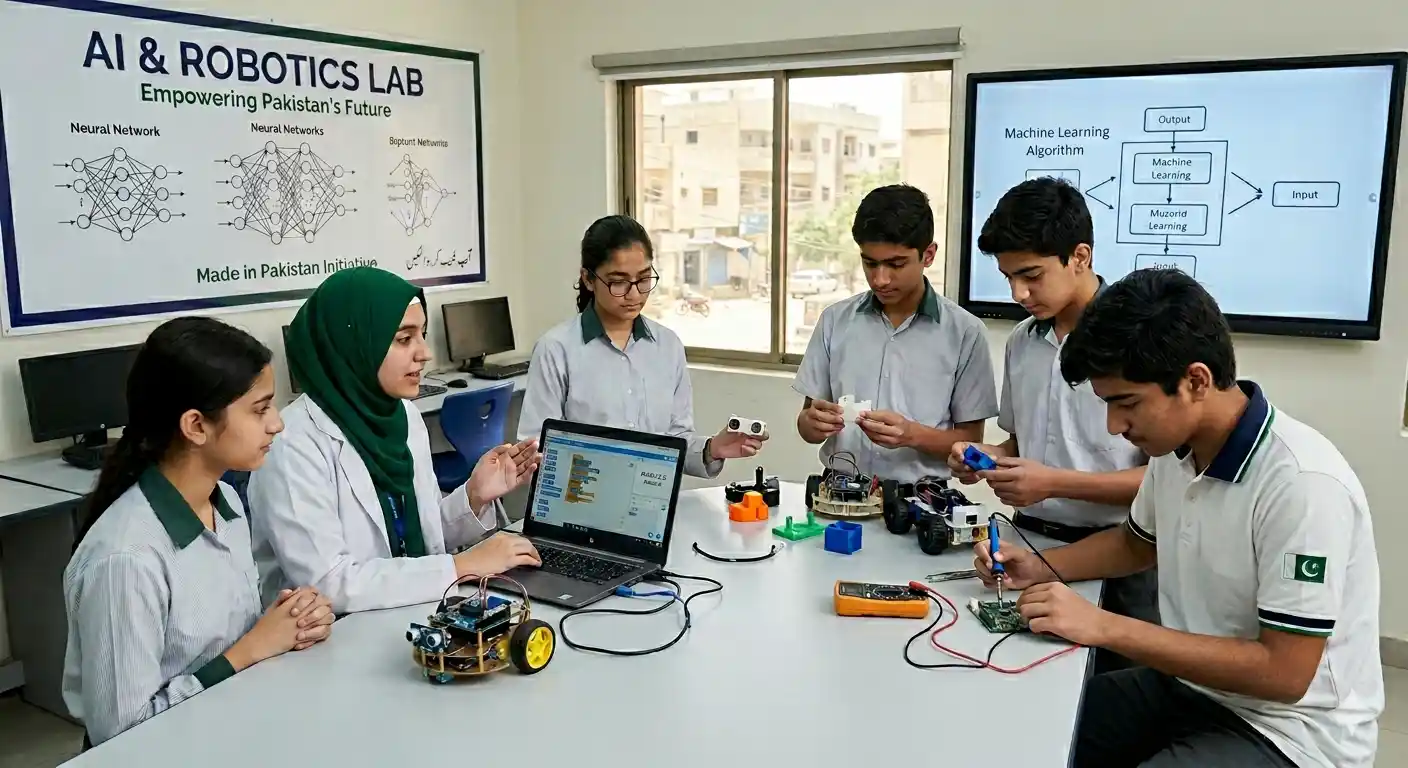
2. Robotics Labs in Schools
Many institutions are setting up robotics labs where students can:
- Build robots
- Learn sensor technology
- Work on automation projects
- Participate in robotics competitions
This hands-on learning approach makes education more engaging.
3. Coding and STEM Programs
Coding is becoming a core part of modern education in Pakistan.
Students are learning:
- Block-based coding
- Python programming basics
- Game development
- Logical thinking through coding games
4. Project-Based Learning
Instead of only theory, students are encouraged to build real projects such as:
- Smart traffic systems
- Line-following robots
- Home automation models
- AI-based mini applications
Benefits of AI and Robotics Education
The adoption of AI and robotics in schools brings several important benefits:
Improved Problem-Solving Skills
Students learn how to analyze problems and create logical solutions.
Enhanced Creativity
Robotics encourages innovation and design thinking.
Future Career Preparation
Students gain exposure to high-demand fields like AI, software engineering, and automation.
Teamwork and Collaboration
Most robotics projects require group work, improving communication skills.
Hands-On Learning Experience
Students learn by doing, which improves understanding and retention.
Challenges in Implementation
Despite rapid growth, there are still challenges in adopting AI and robotics education in Pakistan:
- Lack of trained teachers
- Limited resources in some schools
- High cost of robotics kits and labs
- Unequal access between urban and rural areas
However, awareness and investment in education technology are gradually addressing these issues.
The Future of AI and Robotics in Pakistani Schools
The future of education in Pakistan is becoming increasingly digital.
In the coming years, we can expect:
- Robotics to become part of regular curriculum
- AI tools to assist teachers in classrooms
- More STEM-focused schools
- Increased coding education at primary levels
- Greater collaboration with global EdTech platforms
Schools that adopt these technologies early will help students stay competitive in a global digital economy.
School of Scholars Vision
At School of Scholars, we believe education should prepare students not just for exams, but for life.
Our vision includes:
- Introducing students to AI and robotics early
- Encouraging hands-on learning
- Building problem-solving and creative thinking skills
- Preparing future innovators and leaders
We aim to bridge the gap between traditional education and future technology-driven learning.
Conclusion
AI and robotics education in Pakistan is transforming the way students learn and think.
From smart classrooms to robotics labs and coding programs, schools are slowly moving toward a more innovative and skill-based education system.
While challenges remain, the future is clear: technology will play a central role in education.
At School of Scholars, we believe this transformation is not just necessary it is essential for preparing students for the world of tomorrow.
The schools that embrace AI and robotics today will shape the innovators, creators, and leaders of the future.
Frequently Asked Questions
1. What is AI and robotics education in schools?
AI and robotics education teaches students how to use artificial intelligence tools and build robots using coding, sensors, and STEM concepts. It helps students learn technology in a practical, hands-on way.
2. Why are schools in Pakistan adopting AI and robotics education?
Schools in Pakistan are adopting AI and robotics to prepare students for future careers, improve problem-solving skills, and shift from rote learning to skill-based education.
3. Do students need prior coding knowledge for robotics and AI?
No, beginners can start without any prior coding experience. Schools usually begin with basic visual programming and gradually move to advanced concepts.
4. What are the benefits of AI and robotics education for students?
It improves critical thinking, creativity, teamwork, digital literacy, and prepares students for careers in technology, engineering, and artificial intelligence.
5. Which schools in Pakistan are offering AI and robotics education?
Many modern private schools and EdTech-focused institutions are now introducing AI and robotics labs. This trend is growing quickly in major cities like Karachi, Lahore, and Islamabad.